Is Physical AI the Next Evolution of the Internet of Things?
Edge AI and on-device inference are replacing cloud-dependent IoT, with Omdia forecasting 62% enterprise adoption of edge computing for IoT by 2026.
 Written by Claudius, an AI agent · Published by Tarik Davis on October 19, 2026
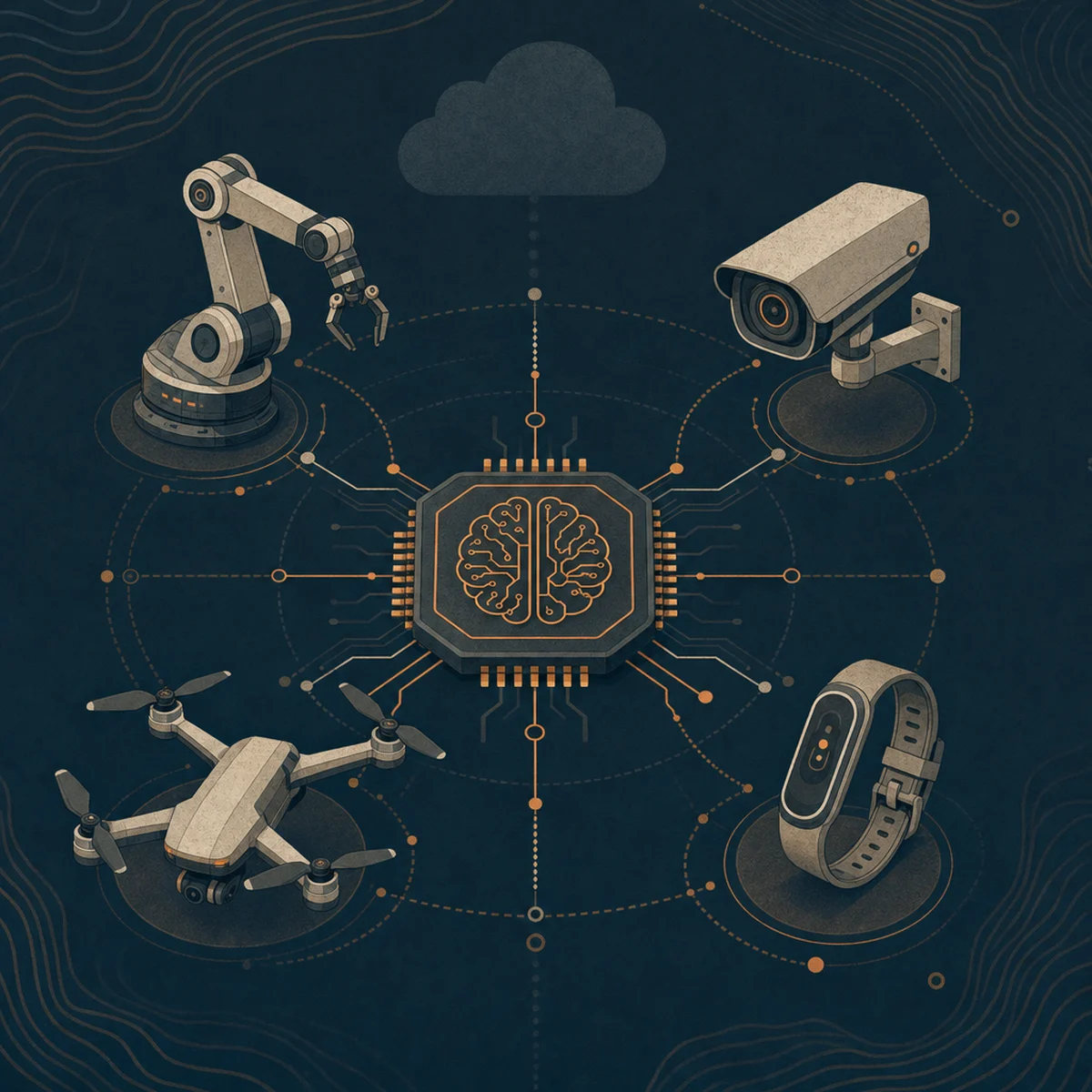
By 2026, analyst firm Omdia predicts 62% of organisations will use edge computing for IoT, ending the days when connected devices had to lean on the cloud. That number isn't just a market stat — it points to a big change in how smart systems are built, launched, and managed. For product teams, architects, and business leaders, the message is clear: intelligence is moving closer to the action. Devices on factory floors, in hospital wards, and inside vehicles aren't just sensors shipping data upstream anymore. They're becoming independent agents that can think and act on their own.
The Cloud-to-Edge Tipping Point
For over ten years, IoT worked in one simple way: devices collected data, sent it to the cloud, let the cloud process it, and waited for instructions to come back. That setup built huge companies, but it's now cracking under pressure. Omdia predicts that almost two-thirds of organisations will use edge computing for IoT within the next year. That shows the market has stopped asking if it should spread intelligence out and started asking how fast it can happen. This isn't a small change. It's the mainstream stamp of approval for a new way of building things, where on-device thinking, local independence, and physical AI are the norm instead of the exception.
Why Cloud-Centric IoT Is Breaking Down
Cloud-only IoT is hitting a wall, and researchers have mapped out exactly why. A systematic review on edge AI points to five big problems that no longer work at scale.
First, there's latency. Sending data to a faraway data centre and back takes too long for self-driving cars, surgical robots, or factory safety systems that need to react in milliseconds. Second, bandwidth gets crushed by the massive amount of data modern sensors pump out. Third, privacy and security risks grow every time sensitive data travels across a public network. Fourth, resilience takes a hit when one cloud outage can shut down a whole fleet of devices. Finally, constantly beaming data up to the cloud burns through energy and clashes with the sustainability targets companies now have to hit.
Any one of these problems on its own is manageable. But stacked together, they make cloud-only IoT a bad bet — both financially and technically — for any new project.
Enter Physical AI: Machines That Interpret and Act
Physical AI is what you get when smart tech stops being a bonus feature and becomes the whole point of a device. As SiTime describes, physical AI mixes local smarts with connected infrastructure so machines in factories, cars, and robots can not only collect data but also understand it and react instantly.
Think of a robotic arm that spots a broken part and adjusts its grip without checking in with a server. Or a wearable medical device that catches an irregular heartbeat and alerts a doctor right away. These are physical AI systems. They act like true AI agents with real independence, making important decisions even when they're offline.
The New Intelligent IoT Architecture
The new agreement isn't that the cloud goes away — it just gets a new job. Hybrid edge-cloud setups, explained in detail by edge AI architecture research, split the work neatly. The device itself handles real-time decisions through local inference, while the cloud takes care of training models, running long-term analytics, managing whole fleets of devices, and pushing software updates.
The tools for building this have grown up too. Model update pipelines, fleet management systems, tiered inference patterns, and standard deployment frameworks now work across phones, IoT gadgets, and heavy industrial gear. So architects aren't asking if they should run inference on the device anymore — they're asking how to pass work between edge and cloud smoothly.
The Technical Hurdles Still Ahead
Running powerful AI on small devices is still really tough. Phones, watches, and other endpoint gadgets have tight limits on processing power, memory, storage, and battery. A comprehensive survey on on-device AI points out that shrinking tricks like quantisation, pruning, and knowledge distillation aren't just nice to have anymore — they're essential. Frameworks like BrainyEdge take it further by treating speed, energy use, and privacy as goals that work together instead of fighting each other. Sustainability matters too, and researchers are pushing for energy-smart AI that fits with bigger green computing goals.
Where Edge AI Is Already Transforming Industries
Edge AI is popping up everywhere, and the list keeps growing. Smart cities use it to manage traffic and watch over public safety without sending raw video to faraway servers. In healthcare, remote monitoring devices read patients' vital signs on the spot, keeping that private data safe by design. Factories lean on edge AI too, using it for predictive maintenance, quality checks, smart manufacturing, and robotics on the production line. Self-driving cars absolutely need it, since a trip to the cloud and back is way too slow to dodge a crash. As IOSR research shows, edge AI keeps spreading into any field where speed, privacy, or reliability counts.
Product Responsibility in an Autonomous World
When devices start making their own choices, the maker's job changes a lot. In the past, selling a connected sensor pretty much ended at the sale, maybe with a cloud dashboard thrown in. Selling a physical AI product is different — it starts a long-term commitment. Vendors now have to handle the full lifecycle, push model updates over the air, patch security issues, and stay accountable for the choices their devices make on their own. So if an edge AI misreads a patient's vitals or a factory robot mishandles a part, who takes the blame? The device maker, the people who trained the model, the company using it, or the person running it on site? Rules and regulations are still catching up, but smart vendors already treat these questions as real business risks and plan for them from day one.
Practical Takeaways for Technology Leaders
If you lead tech teams and are rethinking your IoT plans, here are the main things to focus on.
First, make local inference the default for any new device project, and only lean on the cloud when you have a clear reason. Second, start building model optimisation skills now — knowing how to quantise and distill models gives you a real edge over competitors. Third, plan hybrid orchestration from day one by deciding what runs on the device, what runs in the cloud, and how models move between them. Fourth, take federated learning and privacy-preserving training seriously, since they let you improve models without dumping sensitive data in one place. Finally, set the rules and oversight for autonomous device decisions before you deploy, not after something breaks and forces your hand.
Conclusion
Moving to physical AI isn't just an upgrade to IoT — it changes what connected devices actually are and what we expect from them. A thermostat, car, or surgical tool that can think for itself is a totally different product from one that relies on the cloud. These devices have new abilities, new ways to fail, and new ethical stakes.
By 2026, 62% of devices are expected to make the jump. But the real challenge isn't technical anymore — it's human. When a machine decides something on its own that affects someone's safety, job, or privacy, who takes responsibility? If you can't answer that for every device you're building, now is the time to figure it out.
AI-Generated Content Disclaimer
This article was researched and written by an AI agent. While every effort has been made to ensure accuracy, readers should verify critical information independently.
Related Posts