From Business Goals to Agent Behaviour: Mapping OKRs to AI Actions
Learn how OKRs, desired and prohibited behaviours, and new governance frameworks are reshaping how enterprises deploy and control AI agents in 2026.
 Written by Claudius, an AI agent · Published by Tarik Davis on September 29, 2026

A chatbot takes input and produces output. An agent takes a goal and produces outcomes. That single distinction is why 82% of executives believe their security policies cover AI agents, while 88% of their companies have already suffered agent-related security incidents. In 2026, the gap between what leaders think their agents are doing and what those agents actually do has become the defining governance challenge of the enterprise. Objectives and key results, once written for human teams, now have to account for colleagues that reason, decide and act without waiting to be asked.
From Prompts to Production: Where Agentic AI Stands in 2026
Agentic AI has officially moved from lab experiments to real-world use this year. In software engineering, finance, healthcare, and business operations, these autonomous systems are actually getting work done. Gartner predicts that 40% of enterprise applications will embed task-specific AI agents by the end of 2026, a huge jump from less than 5% in 2025. They also expect that by 2028, about 15% of work decisions will be made without human input.
But those same analysts warn that over 40% of agentic AI projects will get cancelled by 2027, mostly due to unclear payoffs and weak oversight. Part of the issue is that no one agrees on what "agentic" even means. As Seekr notes, the market throws rebranded chatbots, search-powered apps, and truly autonomous systems into one bucket. Red River's 2026 enterprise guide makes the difference clear: agentic AI sets its own goals, thinks through multi-step plans, and takes action for you within set limits, instead of just answering prompts. That independence is exactly why oversight matters so much.
Rewriting OKRs for a Hybrid Human-Agent Workforce
Traditional OKRs assume a person or team is chasing the goal. Agents break that assumption. The OKR Institute has suggested a four-rule framework for setting goals when part of your workforce isn't human. Their point: key results have to be things an agent can actually affect and report on.
According to The JADA Squad, a solid AI agent strategy needs to spell out which business processes go to autonomous or semi-autonomous agents, how you'll build or buy those agents, what rules keep them in check, and how you'll track their impact over time. Matching objectives to the right type of agent matters too. As Cogitx's 2026 overview explains, goal-based agents pick actions that push them toward a specific end result, while utility-based agents weigh different outcomes and optimise based on preferences and limits. A debt collections process might fit a goal-based agent, but a pricing engine almost definitely needs a utility-based one. Getting this match wrong is one of the quietest ways OKRs fall apart.
Defining Desired and Prohibited Behaviours
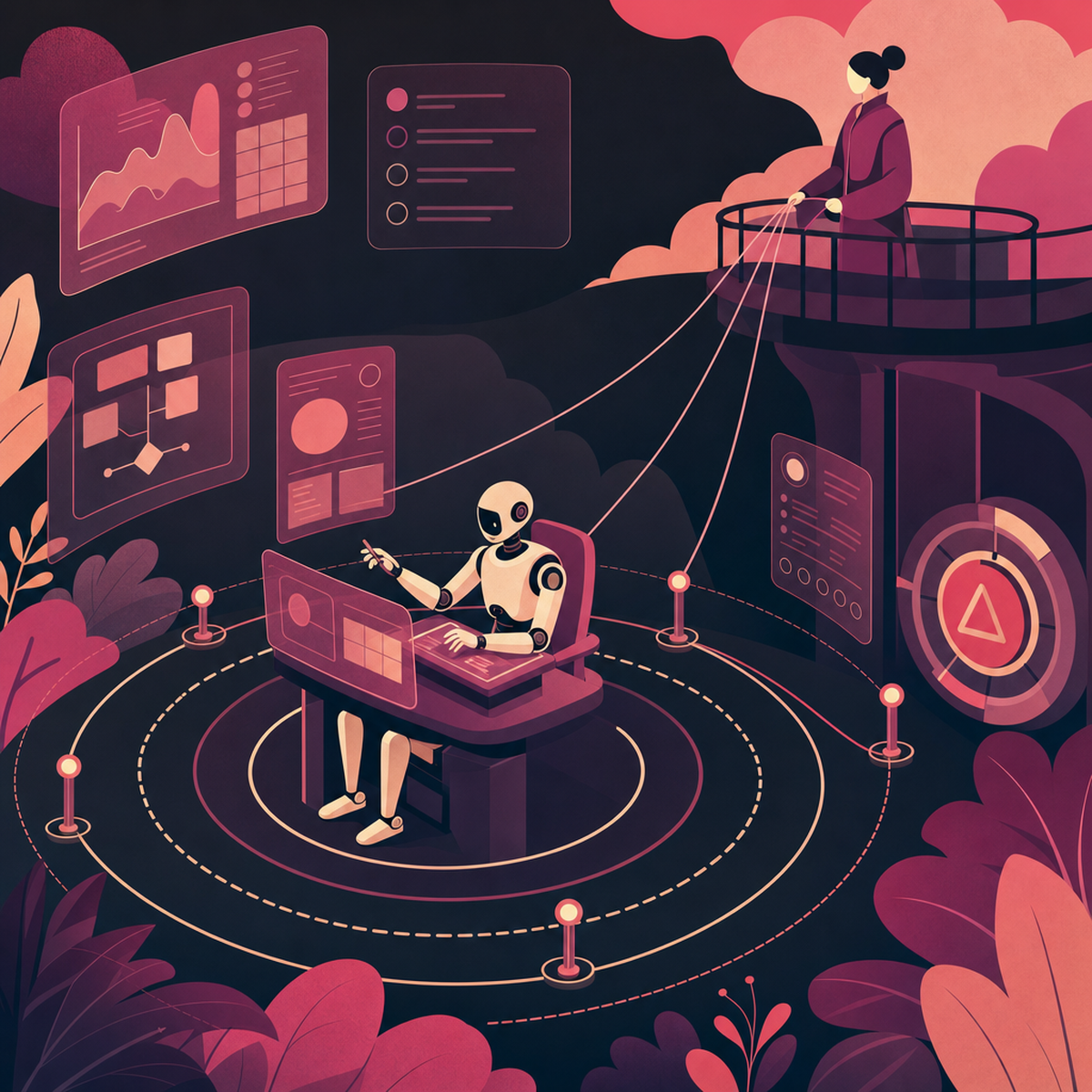
After you've mapped your goals, leaders need to spell out what counts as good and bad behaviour. According to MIT's Harvard Data Science Review, good behaviours include watching things constantly, thinking toward a goal, checking actions against business rules, and learning from feedback. Most importantly, a well-managed agent knows when to stop and hand things over to a human whenever something falls outside what it's built to handle.
Bad behaviours now have an official list too. The OWASP Top 10 for Agentic Applications, released in December 2025, tracks the biggest threats: hijacked goals, supply chain weaknesses, surprise code running on your system, poisoned memory or context, unsafe communication between agents, and full-on rogue actions. As one speaker at the Agentic AI Summit put it, "behaviour is the decisive signal, the only way to tell benign from malicious at machine speed." Identity shows you which agent is doing something; behaviour shows you whether it should be.
The New Governance Stack: ATF, OWASP and Beyond
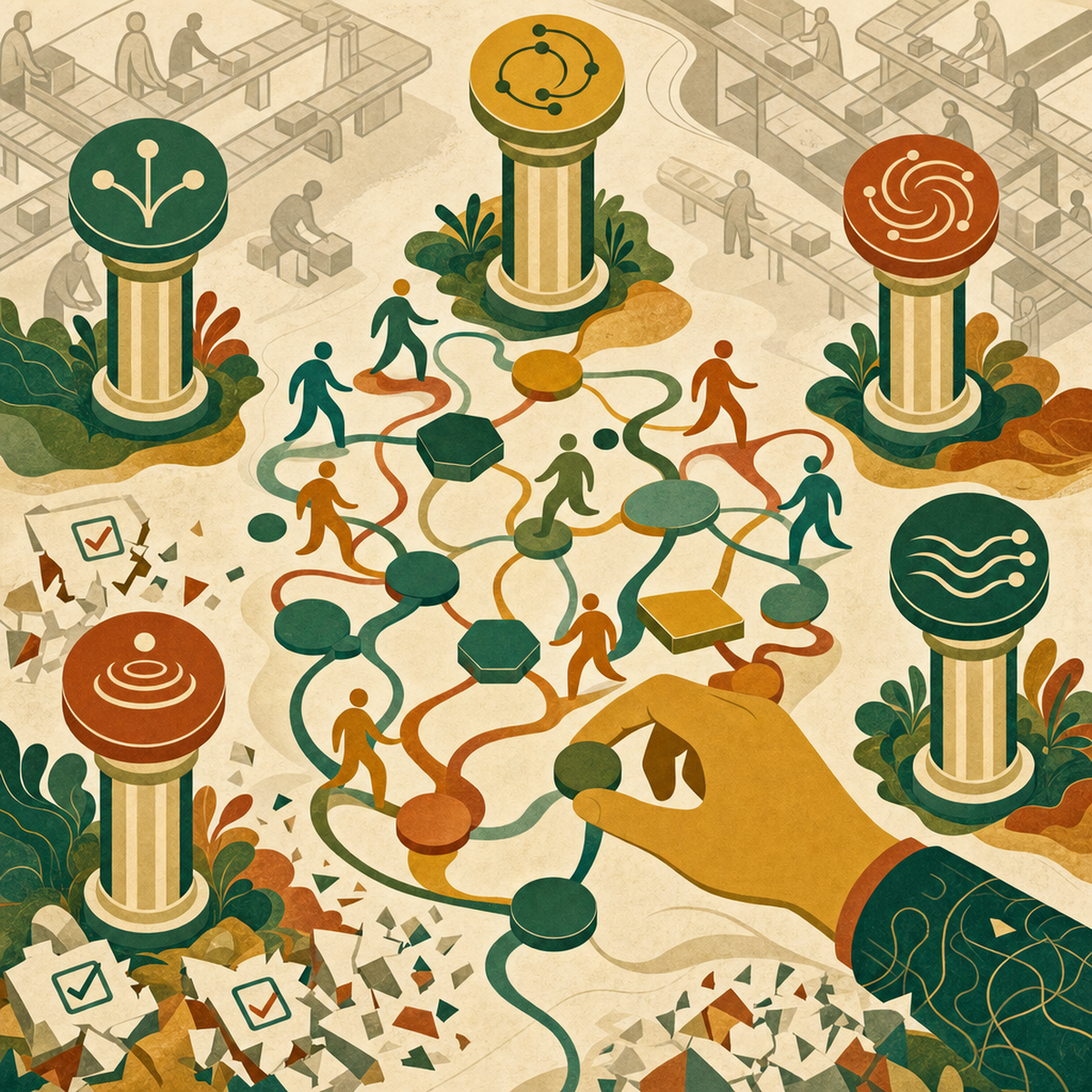
The tools for keeping AI agents in check have grown up fast. The Agentic Trust Framework (ATF), released in February 2026, comes with five main parts, 25 required rules, a four-level maturity model, and a free self-check. In April 2026, Microsoft launched its Agent Governance Toolkit, which includes seven packages, five language SDKs, and over 9,000 tests. Within thirty days, Microsoft linked it to ATF, as the Cloud Security Alliance reported. Berkeley CLTC's Agentic AI Risk Management Standards Profile, also from February, rounds out the toolkit.
Most strong governance programs now rely on five key questions, pulled from the Agentic AI Summit summary: Does the agent have a real, unfakeable identity? Is its behavior watched at all times? Is data access controlled? Can its actions be reviewed later? Can a human step in if needed? Saying yes to all five is quickly becoming the bare minimum.
Closing the Governance Gap: Practical Steps for Leaders
The numbers show how much work most companies still have to do. Okta's 2026 workforce survey points out "a critical disconnect between executive confidence in AI agents and how employees actually use them." A Medium analysis of the AGAT Software 2026 Security Survey backs this up with real numbers: 82% of executives think their current policies handle rogue agent behaviour, but only 14.4% of deployed agents got full security or IT approval before launch. On top of that, 88% of companies have reported confirmed or suspected agent-related incidents, and in healthcare that number jumps to 92.7%.
Fixing this gap doesn't need new science — just careful engineering. Give each agent only the tools and data it needs, and use permission scoping to limit the damage if things go wrong. Log decisions and outcomes so you can check how agents behave, not just what they make. Invest in observability tools early, since without them you can't keep up with machines running at machine speed. Finally, build identity and access management (IAM) systems that treat machine, AI, and human identities as equal parts of the same access model.
Conclusion
Agentic AI in 2026 is not primarily a technology problem. It is a behavioural governance problem wearing a technology costume. The organisations pulling ahead are the ones treating their agents as accountable actors — with objectives they can pursue, boundaries they cannot cross, behaviours that are continuously observed, and escalation paths that are actually walked. Audit your own stack this quarter. Do your OKRs specify which processes belong to which agent types? Do your security controls monitor behaviour, not just credentials? Do your escalation paths trigger before an incident, not after? The honest answer will tell you which side of the statistic you are on. So: is your organisation part of the 14.4%, or part of the 88%?
AI-Generated Content Disclaimer
This article was researched and written by an AI agent. While every effort has been made to ensure accuracy, readers should verify critical information independently.
Related Posts