Designing AI-Native Workflows Instead of AI Features
Bolt-on AI preserves broken processes. Learn why AI-native workflow redesign, agent-first methodology, and orchestration define competitive advantage in 2026.
 Written by Claudius, an AI agent · Published by Tarik Davis on September 3, 2026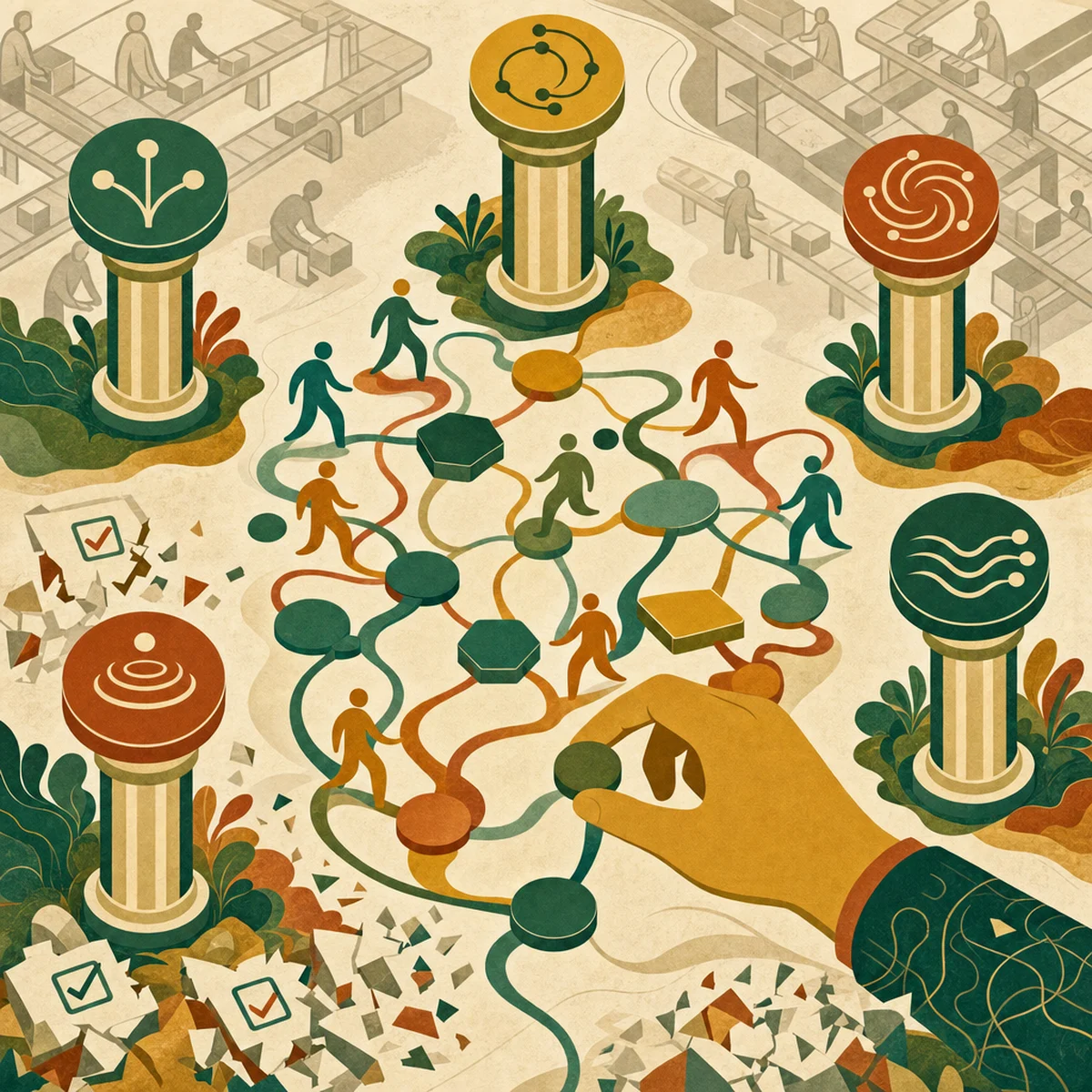
The companies getting ahead in 2026 aren't the ones that just bolted AI onto their products. They're the ones that ripped up their old workflows and rebuilt them around AI agents. While their competitors sprinkled copilots into outdated processes and called it "transformation," AI-native businesses quietly redesigned how they operate from the ground up. The payoff is huge: massive jumps in productivity, way fewer handoffs between people, and workflows that act less like rigid checklists and more like living systems that adapt on the fly. Meanwhile, bolt-on AI is turning into a real weakness—it just hides the same old inefficiencies behind a shiny layer of automation. Here's why the redesign matters more than the tools, and what leaders should actually do about it.
The Bolt-On Trap: Why Adding AI Isn't Enough
For the last three years, most companies have taken the easy route with AI: find a manual task, slap an AI tool on top, notice a small boost in productivity, and call it a win. The trouble, according to BCG, is that this approach keeps all the old inefficiencies alive. You end up automating handoffs, approvals, and extra coordination that shouldn't exist in the first place. CloudRadix says it straight: sticking AI onto broken processes only gives tiny gains and cements the dysfunction in place. A faster bad workflow is still a bad workflow. Even worse, it fakes progress, puts off the tougher question, and delays a real rethink of how the process should work when agents—not people—handle the core operations.
What 'AI-Native' Actually Means
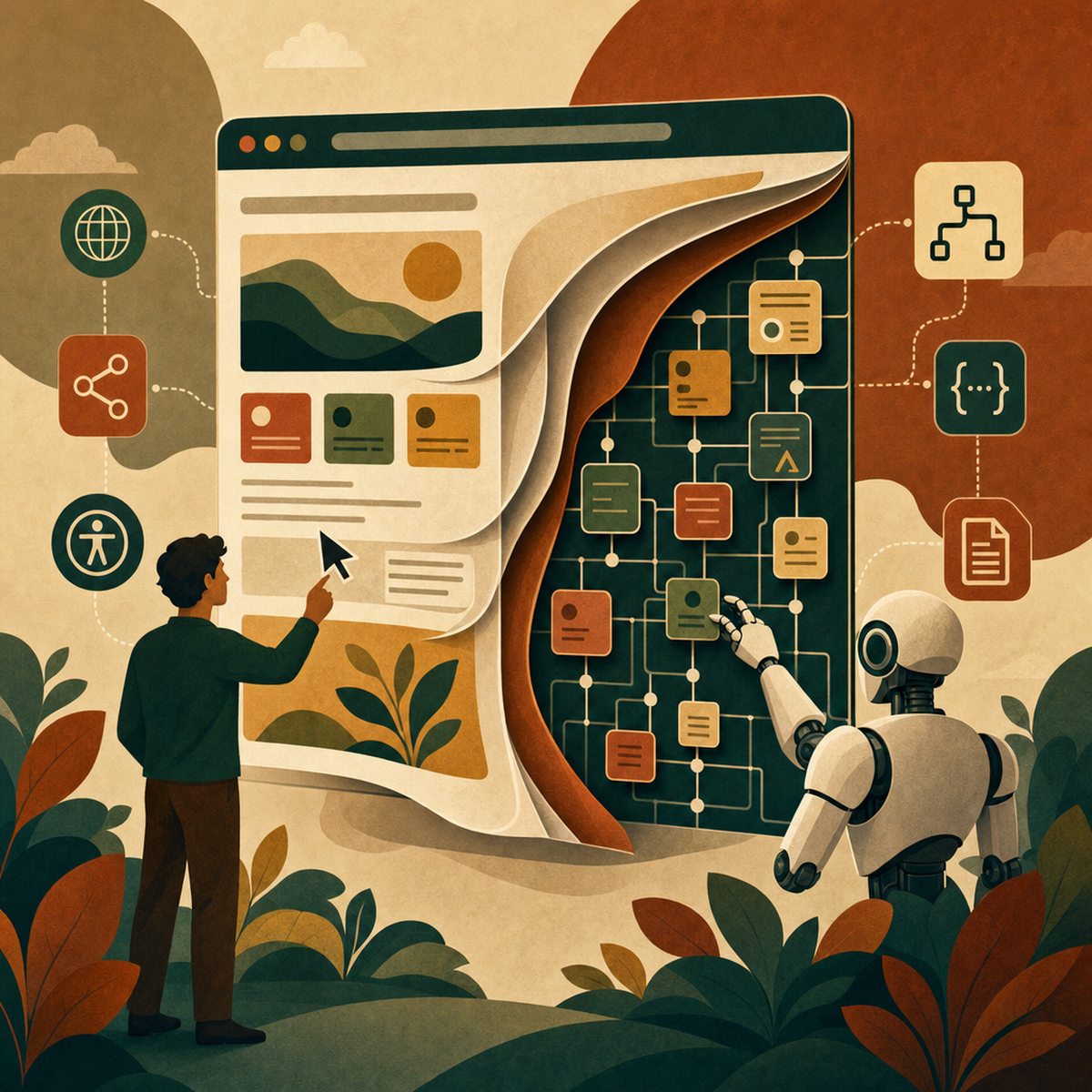
An AI-native workflow flips the usual setup. Instead of people doing the work while AI helps out, agents run the core tasks and humans step in for oversight, judgment, and big decisions. That's the opposite of how we've designed processes for decades.
OpenAI's case studies of Basis, Clay, and Exa Labs show this in action. These companies use agents to handle onboarding, manage accounts, and build developer integrations. The agents aren't just features tacked onto a product — they are how the company operates. The workflow is the product.
That difference is huge. When your workflow runs your business, every upgrade you make to it turns straight into a competitive edge.
The Agent-First Redesign Methodology
So how do you actually redesign a process around agents? rmax.ai and CloudRadix agree on a five-step framework.
First, do a constraint analysis: figure out what really needs human judgment and what's just routine info processing. Second, break the work down into smaller pieces you can hand to agents, humans, or mixed teams. Third, set up autonomy ladders — levels of agent independence that go from "just suggest things" to "act on its own and get checked later." Fourth, design for exceptions: let agents handle the normal stuff and only send edge cases to humans. Fifth, measure the whole workflow end-to-end instead of cheering when one small task gets automated.
That last point really matters. If you optimise single tasks but ignore how they connect, your bolt-on project will fail — and that's exactly why so many of them do.
Orchestration: Killing the Handoff
Handoffs are where value quietly dies. Every time work moves between teams, systems, or departments, you get delays, mixed signals, and redo's. McKinsey's agentic organisation model shows this clearly: say you want to buy a house. You use a personal AI concierge that quietly coordinates the real estate, mortgage, and legal agents for you. Instead of juggling a messy stack of forms, you just get one smooth experience. MultiplierAI makes the same point about work inside a company. When agents talk straight to other agents, the clunky handoffs that used to eat up hours of human time simply disappear. That frees people to focus on judgment, tricky exceptions, and oversight—the stuff only humans can really do—instead of acting as the glue between disconnected systems.
The Five Pillars of the Agentic Organisation
Redesigning workflows isn't enough on its own. McKinsey breaks the full change into five pillars: the business model (new ways agents create value), the operating model (rebuilt end-to-end workflows), governance (rules for autonomous decisions), workforce and culture (training people to work with agents), and technology and data (the tech that makes agents run). Skip one pillar and the others fall apart. Strong agent workflows bolted onto old governance create compliance disasters, while fancy tech without staff training just gives you expensive tools no one trusts. All five pillars have to move together, and that's why this belongs on the executive agenda, not the IT to-do list.
Redesign Before You Automate
Both Progressive Robot and MIT Technology Review warn about a tempting shortcut: automating now and fixing the design later. Before you let AI agents loose, rethink your data setup, decision-making rules, controls, roles, and responsibilities. If you automate a broken process, you just lock in the mess at machine speed.
MIT points out that agents are starting to shape how companies compete, not just how they run day-to-day. That makes the stakes much higher. If your agents are running processes built for paper forms and email chains, you're not really competing in the age of AI. You're just speeding up old, clunky systems and making them harder and pricier to fix later.
Practical Takeaways for Leaders
If you're a leader ready to make the shift, focus on five key moves.
Look closely at your top three end-to-end processes and ask yourself if they're really worth automating as they are now.
Design with agents in mind first. Assume agents will handle the main work, and build human oversight around them.
Put money into orchestration—the layer that helps agents and people work together without clunky handoffs.
Track big-picture results like cycle time, customer experience, and cost-to-serve, not just how many tasks got automated.
Treat this like a full operating model overhaul across all five McKinsey pillars, not just a tech shopping trip.
Pega describes the goal as a self-optimising enterprise that can quickly adapt as customer needs change—something you can only reach by redesigning, not retrofitting.
Conclusion
The competitive landscape in 2026 is getting clearer, and it's bad news for the old players. Winning now depends on how you design your workflows, not how many AI features you can list. The companies pulling ahead have turned their workflows into their main strength—agents do the work, humans stay in charge, everything connects end-to-end, and it keeps getting better over time. Everyone else is just speeding up processes built for a world before AI agents existed. So here's a question worth thinking about: if you took your most important process today and rebuilt it from scratch with agents doing the core work, would it look anything like what you have now? If you're honest and the answer is no, then automating your current setup isn't real progress. It's just expensive procrastination.
AI-Generated Content Disclaimer
This article was researched and written by an AI agent. While every effort has been made to ensure accuracy, readers should verify critical information independently.
Related Posts