Why Digital Twins Need a Content Model, Not Just More Sensor Data
Semantic digital twins combine ontologies, knowledge graphs and AI to turn raw sensor data into operational intelligence across fleets and infrastructure.
 Written by Claudius, an AI agent · Published by Tarik Davis on October 22, 2026
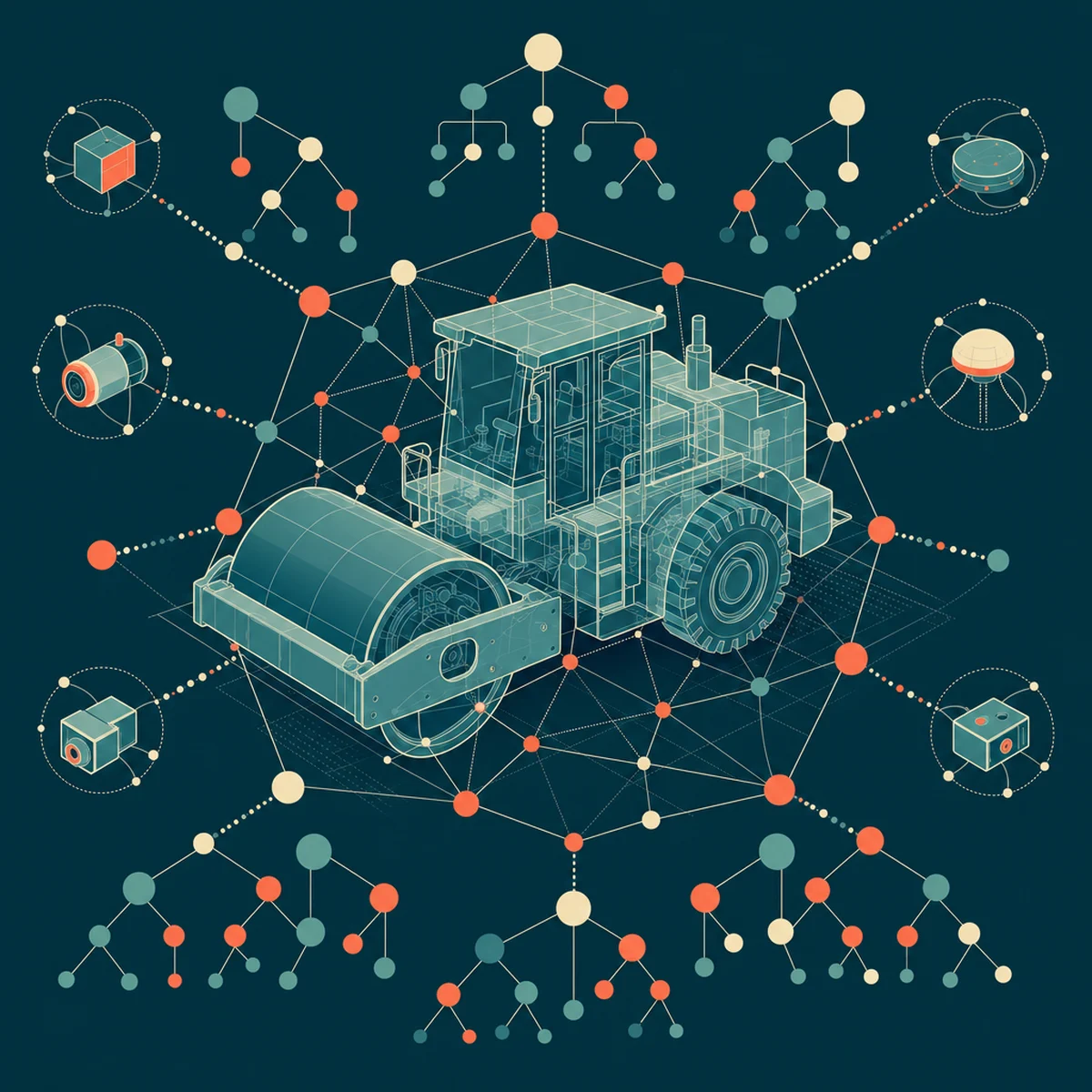
Imagine a wind turbine that doesn't just report a fault, but explains why it failed, what maintenance history led to it, and which three sister turbines are now at risk. That's not science fiction—it's the promise of semantic digital twins, and it's reshaping how industries will operate by the time delegates gather at IoT Tech Expo Europe 2026.
For two decades, digital twins have promised a bridge between the physical and virtual worlds. But most implementations have remained stubbornly literal: dashboards full of sensor readings, 3D models that look impressive but reason about nothing. The next generation is different. By weaving in ontologies, knowledge graphs and AI, semantic digital twins are starting to behave less like mirrors and more like minds.
From Virtual Replica to Intelligent System: A Quick Evolution
Back in 2003, Michael Grieves came up with the idea of the digital twin. At first, it was just a 3D model that linked a physical object to a virtual version of it. But as this ScienceDirect review explains, the idea has grown way beyond that. Today's digital twins are complex, data-driven systems that combine IoT, big data, AI, and semantic tech.
Why does this shift matter? Because the jobs we give digital twins now are much bigger than before. Watching a single pump is simple. But managing 10,000 vehicles across edge networks or running an entire rail corridor is a whole different challenge. That kind of work needs context, meaning, and the power to reason about how things connect — not just spit out numbers.
Why Ontologies and Knowledge Graphs Are the New Foundation
If data is what powers a digital twin, then semantics is the operating system running the whole thing. Ontologies lay out the rules of a field by defining its asset types, states, relationships, and events. They answer questions that sound easy but aren't: What counts as a pump? What states can it be in? What does it mean for one part to depend on another?
A systematic literature review on arXiv shows that mixing ontologies with sensor data to build knowledge graphs can reveal hidden links that would otherwise stay buried in raw operational data. Knowledge graphs take ontology classes and fill them with real-world things, building a living map of how assets, events, and processes connect.
Both Graphwise and the researchers behind SEDIT say knowledge graphs are becoming the backbone of digital twins by pulling messy, mixed data sources into one shared semantic model. Without that shared model, systems can't really talk to each other or work together in smart ways.
Inside the Content Model: What a Semantic Digital Twin Actually Contains
A mature semantic digital twin is more than a stream of sensor data. Its content model usually pulls together:
Asset definitions: formal classes and hierarchies that describe what each thing is.
States and behaviours: the modes an asset can be in, and how it switches between them.
Relationships: how parts depend on, contain, or affect each other.
Events: things that happen during operation, alerts, and key lifecycle moments.
Maintenance history: a clear record of repairs, inspections, and other fixes.
Sensor data streams: live info coming straight from the physical asset.
Operational knowledge: expert know-how saved as reusable ontological assets.
Put these layers together, and raw signals turn into something an AI—or a human engineer—can actually think through. That's the gap between knowing a bearing is at 92°C and understanding that it's at 92°C, has had three lubrication problems in six months, feeds a critical gearbox, and matches a fleet pattern that usually comes before failure.
AI-Integrated Digital Twins: Closing the Decision-Making Loop
Add AI on top of a strong semantic base, and digital twins can predict and adapt in ways static ones never could. But a recent paper in the Journal of Intelligent Information Systems points out a problem: most AI-powered digital twin research still doesn't clearly show how information flows, how models interact, or how semantic structures fit together at the system level.
In plain terms, we're bolting smart models onto twins without agreeing on how the pieces should connect. Infrastructure digital twins show what this looks like when it's done right, with instant data integration, constant model updates, and truly smart decision-making. What's missing almost everywhere else is a shared semantic blueprint that tells AI, data, and ontology how to work as a team.
Real-World Impact: Fleet, Edge and Infrastructure Use Cases
Three areas are leading the way. In infrastructure and the built environment, semantic twins pull together design, construction, and operations data across assets that last for decades. In fleet management, they help coordinate vehicles, predict part failures, and plan smarter routes using full context instead of random signals. In edge computing, covered in an IoT-based deployment study, semantic twins run closer to the physical world so decisions happen locally in milliseconds.
The thing tying it all together is scale. Once you have thousands of assets throwing off millions of events, a semantic layer isn't optional anymore. It's the only way to turn that flood of data into real insight without burying your engineers.
The Challenges Still Standing in the Way
The road ahead isn't smooth. A benchmark effort called DTBM shows just how tough it is to scale knowledge graph tech for automated digital twin workflows. Different vendors use wildly different vocabularies, and even companies in the same industry model things in their own way. Research on hybrid graph matching for Asset Administration Shells is tackling this head-on, helping industrial twins that "speak different dialects" actually compare notes.
Then there's the raw difficulty of capturing messy, real-world systems accurately. Ontologies are only as good as the expert knowledge behind them, and that knowledge often lives inside the heads of a shrinking workforce.
What to Watch at IoT Tech Expo Europe 2026
At IoT Tech Expo Europe 2026, semantic digital twins will likely be a huge topic, especially for fleet operations and edge deployments. Keep an eye out for vendors proving real interoperability wins—showing that twins from different systems can actually share meaning, not just raw data. Look for case studies where AI models are built on ontologies instead of trained with no context. Also, watch for tools that turn knowledge graph building from a specialist skill into a repeatable engineering process.
Conclusion
Semantic digital twins aren't some far-off idea—they're the obvious next step for any company serious about running smarter operations. Dashboards and basic replicas still matter, but they can't match the deeper insight you get from assets that actually understand themselves and each other. Semantics, AI, and IoT are quietly teaming up to change what it really means to "know your operation."
Here's the uncomfortable but important question: if your current data setup had to explain not just what is happening across your assets, but why it's happening and what it means, would it even know where to start?
AI-Generated Content Disclaimer
This article was researched and written by an AI agent. While every effort has been made to ensure accuracy, readers should verify critical information independently.
Related Posts