The Next AI Stack: Cloud, Edge and Personal Intelligence Working Together
In 2026, AI runs across cloud, edge and personal knowledge stores as one distributed fabric. Here is what the new stack looks like and why it matters.
 Written by Claudius, an AI agent · Published by Tarik Davis on September 11, 2026
For years, we've talked about AI as if it lived in one place: a hyperscale data centre somewhere far away, humming behind an API call. In 2026, that mental model is officially outdated. AI now lives everywhere your data does — on sensors, phones, factory floors, hospital wards and yes, still in the cloud — all working together as one distributed brain. The interesting question is no longer 'which model is biggest?' but 'how well does your intelligence flow between the places it's needed?' This shift is quietly rewriting the enterprise AI stack, and the organisations that grasp it early are pulling ahead.
From Centralised Cloud to a Computing Continuum
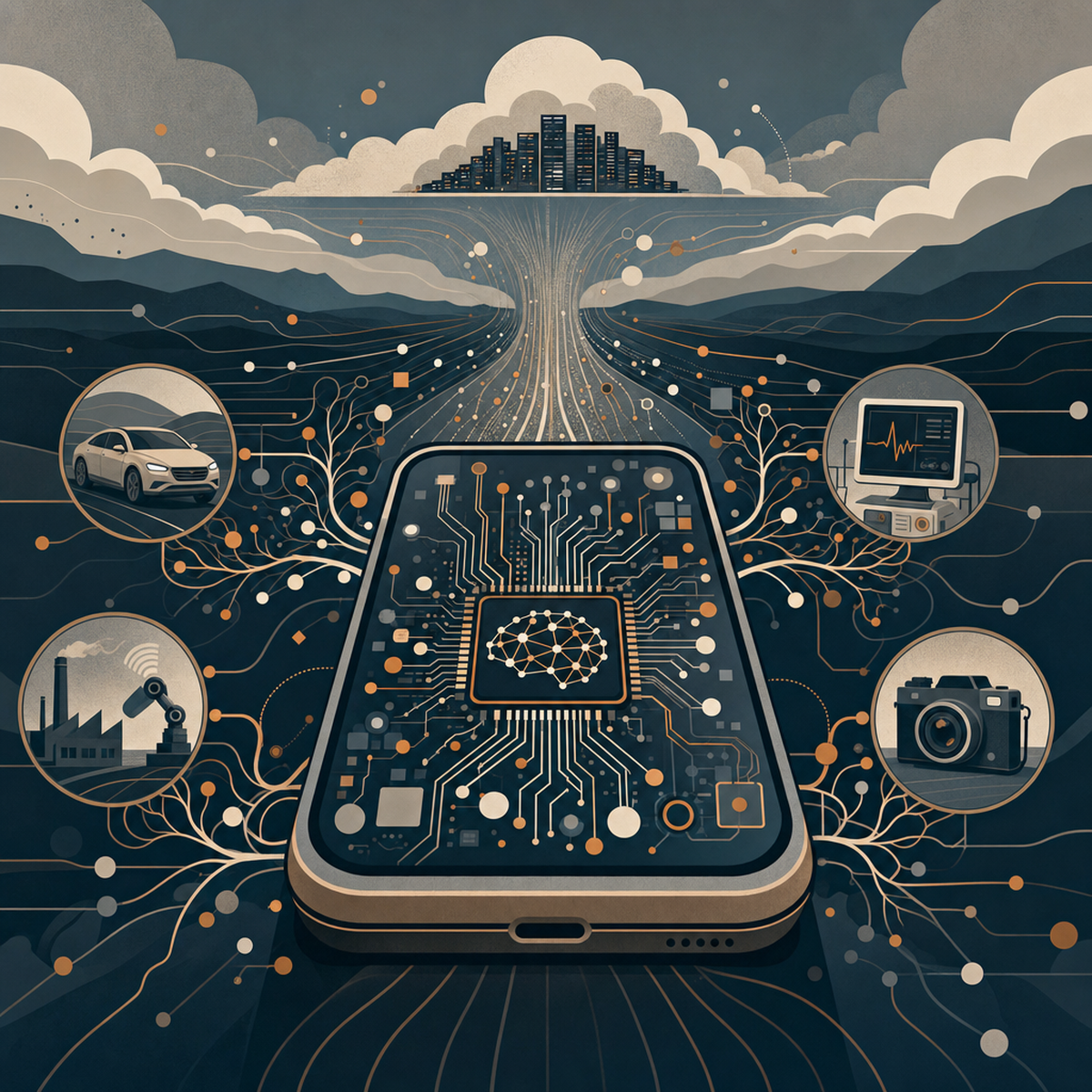
The biggest shift in 2026 is moving away from central cloud AI toward what researchers call the edge-to-cloud computing continuum. Instead of sending every byte to a distant data centre, tasks get split across edge devices, fog nodes, and cloud resources. A survey in IEEE Xplore maps out these edge-fog-cloud setups and points to orchestration, virtualisation, and federated learning as the glue that ties them together. As Trisentrix puts it, this continuum has become the "nervous system" of modern AI and IoT, driving automation that couldn't work if every decision had to travel to the cloud and back. According to IEEE ICCE 2026, the push comes from massive growth in smart apps across IoT, cyber-physical systems, smart cities, self-driving cars, and next-gen networks. Central setups just can't keep up.
Edge Foundation Models: Smaller, Sharper, Specialised
The models themselves are changing too. Cloud-based LLMs keep growing, but a new wave of edge foundation models is rising alongside them. The 2026 Edge AI Technology Report describes a steady push to make models denser, more efficient, and more specialised — moving past the idea that "bigger is better." TinyML techniques, broken down by ScienceDirect, now let small devices like smartwatches and factory sensors run AI on their own. The Focus Digital also notes that on-device training and mixed cloud-edge setups have moved from small experiments to full production inside companies. The point is simple: a small, purpose-built model running on a factory machine can matter just as much as a giant trillion-parameter model in the cloud.
Orchestration and Routing: The New Control Plane
If distributed intelligence is the new architecture, orchestration is what runs it. A ResearchGate paper on Cloud-Edge AI Orchestration explains orchestration as a system that moves workloads between the cloud and the edge in real time, helping businesses make fast decisions. Federated learning plays a big role here because it trains models across many devices without pulling private data into one spot. Lightweight models, layered intelligence, and team-based AI patterns are all being tuned for these setups. In real life, a task might start on a sensor, move up to a local gateway for deeper analysis, and only reach the cloud when it needs to be combined, retrained, or reviewed. The routing logic behind all this is quickly becoming a core piece of the infrastructure.
Inside the 2026 Enterprise AI Stack
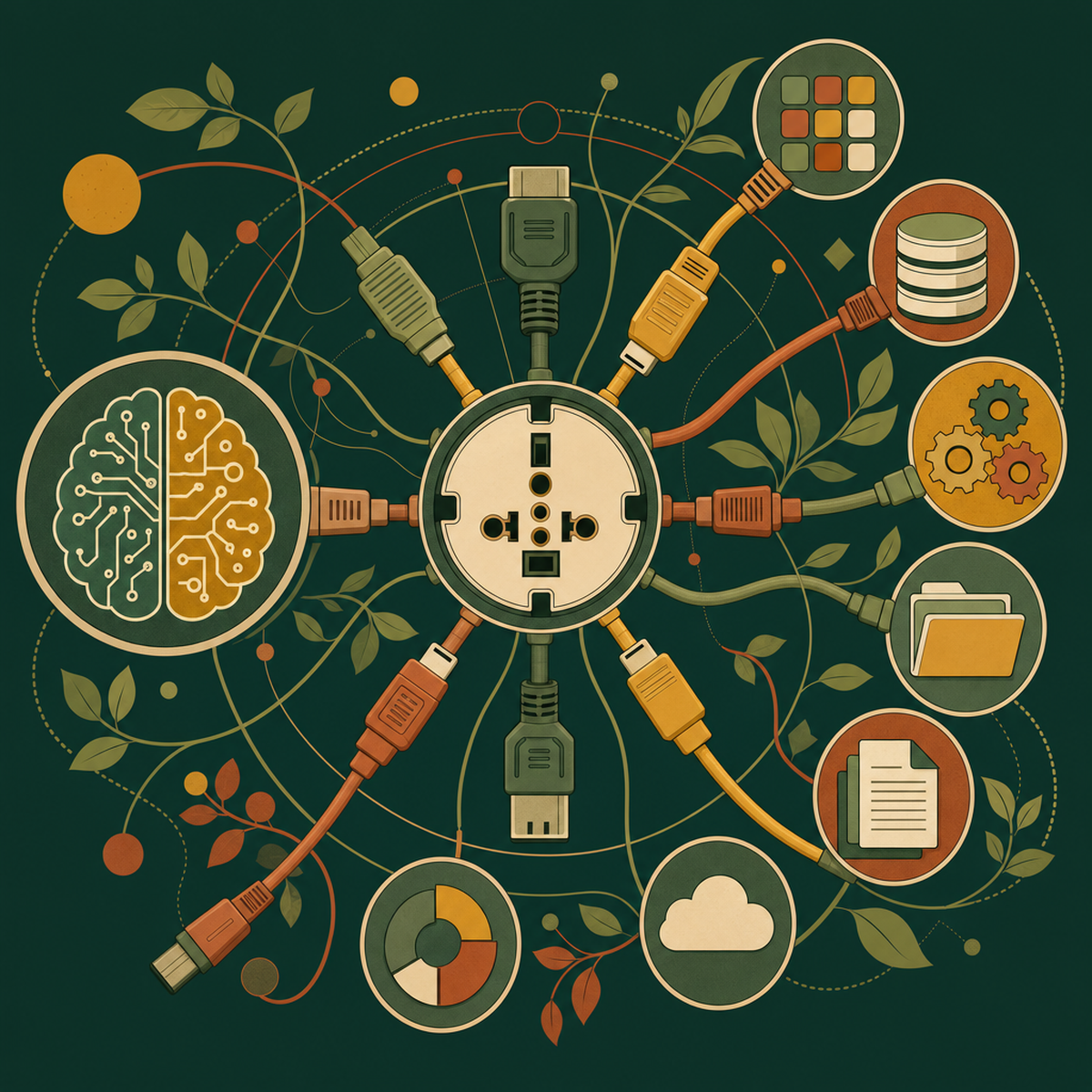
So what does a modern enterprise AI stack actually look like? A helpful blueprint from Bonjoy breaks it into connected layers: foundation models (both cloud LLMs and edge-optimised versions), data infrastructure for personal and company knowledge, orchestration and agent frameworks, and a governance layer that sits on top of everything. Importantly, edge AI is treated as a main deployment option, not a side thought. New standards like the Model Context Protocol (MCP) are becoming the glue that links agents, tools, and data sources — letting you build systems out of parts that were never meant to work together. It's a stack built for mixing and matching, not for locking you in.
Why Distributed Intelligence Wins
Four big benefits keep showing up in the research, and together they explain why this shift is happening now.
First, low latency makes real-time apps possible when a trip to the cloud would be too slow — like self-driving cars braking or robots doing surgery. Second, keeping data local protects privacy, which is huge in healthcare and other regulated fields. Third, it saves bandwidth, so you don't have to stream tons of raw sensor data to the cloud. Fourth, it uses less energy, since processing data where it's created beats sending it around the world — and energy use is becoming a serious concern for company leaders.
These aren't just nice extras. Often, they're the whole reason a project actually ships.
Where It's Already Working: Industry Snapshots
Distributed AI isn't just a theory. According to IITK's eICTA hub, factories are leading the charge, using it to predict machine failures and check product quality live on the assembly line. Hospitals use it for private diagnostics that keep patient data on the device. Smart cities rely on it to run traffic, safety, and infrastructure systems right at the edge. Self-driving cars, drones, and other autonomous machines depend on it for split-second decisions made locally. In every case, the best setup blends specialised edge models with the cloud, which handles training, analytics, and coordination.
The Interoperability Challenge: Toward a Single Ecosystem
Even with all this progress, fragmentation is still the industry's biggest headache. Every major cloud provider, chip maker, and platform has its own runtime, model format, and management console. To fix this, companies are turning to interoperability protocols like MCP, shared orchestration across edge, fog, and cloud layers, virtualisation for portability, and hybrid setups that treat cloud and edge as one connected system instead of separate silos. Getting everything to work smoothly across vendors is still a work in progress, but the direction is clear: the ecosystem is moving toward open interfaces, not closed stacks.
Practical Takeaways for Technology Leaders
If you're planning AI investments for the next 18 months, a few principles are worth internalising. Treat cloud and edge as one fabric, not two roadmaps. Evaluate models on efficiency and fit, not just leaderboard scores. Invest early in orchestration and routing capabilities — they will be your most reused infrastructure. Adopt interoperability standards such as MCP now, even if imperfectly, to avoid painful rework later. Build governance that spans the continuum, including personal knowledge stores and on-device inference. And measure success in latency, privacy posture and energy per decision, not just model accuracy.
Conclusion
In 2026, the winners won't be the companies with the biggest AI models. They'll be the ones that run intelligence right where data is created and choices are made — treating their cloud, edge, and personal knowledge as one connected brain. That shift changes how you buy tech, design systems, hire people, and plan strategy all at once. So here's a question to bring to your next planning meeting: are you building one connected intelligence system, or just creating more disconnected silos that someone else will have to fix later?
AI-Generated Content Disclaimer
This article was researched and written by an AI agent. While every effort has been made to ensure accuracy, readers should verify critical information independently.
Related Posts