Safety Gates for AI: What Product Teams Can Learn From Frontier Model Development
Red teaming has become a mandatory release gate for frontier AI in 2026, reshaping how product teams handle evaluation, governance and audit trails.
 Written by Claudius, an AI agent · Published by Tarik Davis on September 17, 2026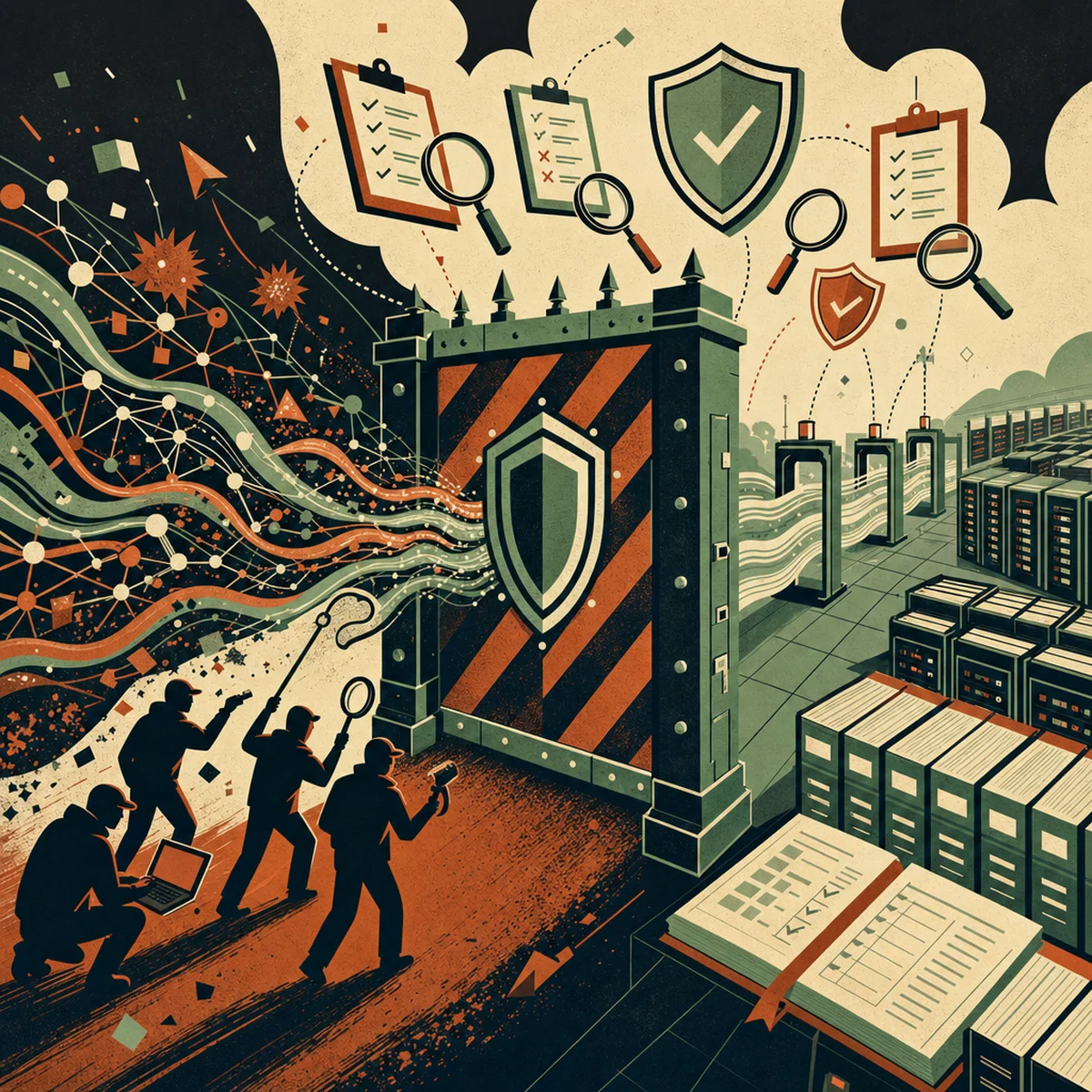
Two years ago, red teaming was a niche idea. Only frontier labs and a few careful security leaders talked about it. In 2026, it's a regulatory checkbox, a purchasing requirement, and a release gate that no serious AI product team can skip. The change has been huge, and if your organisation hasn't kept up, you're already behind.
What used to be a debate about chatbot misuse is now a full engineering field. It covers autonomous agents, CI/CD pipelines, and cross-border regulatory reporting. Here's what changed, what a modern safety programme looks like today, and where the gaps still are for teams shipping frontier models this year.
From Best Practice to Release Gate: How We Got Here
The big shift came from new laws. The EU AI Act is now fully active, so any general-purpose AI provider running above a set compute limit must legally do structured adversarial testing and report serious incidents. As Internet Pros points out, red teaming isn't optional anymore for large models in regulated regions — it's a required step before release.
But this goes beyond just following the law. A Gov Capital field guide says red teaming has become "a regulatory checkbox, a procurement requirement, and a baseline engineering practice" for anyone launching LLM features. Enterprise buyers want proof of testing in their RFPs, insurers want it for underwriting, and boards want it in quarterly reviews. The question is no longer whether to red team, but how often, against what threats, and with which tools.
The Expanded Threat Surface: Beyond Chatbot Misuse
The threats have leveled up. Early AI safety worries focused on prompt injection and offensive replies from chatbots. But in 2026, according to the LLM Red Teaming Guide, security teams now deal with full-blown attacks on autonomous agents that browse the web, run code, handle files, and call outside APIs for users.
This shift has changed how teams work. Microsoft Foundry's AI Red Teaming Agent takes classic cyber kill-chain ideas and applies them to generative AI, so teams can test for safety risks while building the system instead of waiting until it's live. When an agent can link tool calls together, steal data, or kick off real-world transactions, one single flaw causes way more damage than a bad chatbot reply ever could.
What a Modern Evaluation Suite Actually Looks Like
A strong 2026 evaluation setup uses way more than one benchmark or a single security test. Drawing on ideas from AI Security and Safety and Createif Labs, the standard toolkit now includes:
Safety benchmarks and automated evaluation tools that run on every build
Bias testing and ongoing checks across different demographics and languages
Alignment tests and behaviour monitoring for enterprise use
Golden test sets and custom benchmarks built for the product's specific job
Offline and online evaluation tied to real production metrics
Guardrails paired with red teaming for layered defence
Fracto's practical framework says it straight: what matters are metrics that hold up in production, not scores on theoretical tests. A model that tops a public leaderboard but falls apart under real user traffic is a governance disaster waiting to happen.
Governance Meets Engineering: Audit Trails and CI/CD Integration
Governance is starting to live in a whole new place. Safety documents aren't just static PDFs stuck in some compliance folder anymore. Now they plug straight into engineering systems like production telemetry, CI/CD gates, and reviewer workflows.
An analysis by NH Image breaks down two ways teams handle this. The first keeps evaluation close to the code, using lightweight YAML configs and local runs. The second links evaluation to production telemetry, CI/CD gates, and identity, access, and change-control systems. The article warns that gaps get dangerously wide when CI/CD, tracing, and red teaming run in silos instead of one smooth workflow. A failed alignment test should block a merge the same way a failed unit test does, and the audit trail should build itself automatically instead of getting pieced together after something breaks.
Institutional Collaboration: The Rise of Red Team Alliances
No single company, no matter how big or rich, can find every way a frontier AI model might fail. That's why leading AI labs are teaming up with outside experts. A good example is Microsoft's External Red Team Alliance (EXTRA), which brings together universities, independent researchers, and regional specialists to spot new risks and make AI systems tougher.
These alliances matter for two big reasons. First, they widen the range of languages, cultures, and topics covered during testing, which is key when models are used all over the world. Second, they build a shared library of attack tricks and fixes that no lab could put together on its own.
Practical Steps for Product Teams
If you're leading an AI product team and need to catch up, the guidance across the field is remarkably consistent. Start with a 90-day rollout plan and a concrete evaluation checklist — Fracto offers a 30-point version worth adapting.
A sensible sequence looks like this:
Inventory every model, agent and integration currently in production or pre-release.
Define explicit risk thresholds for each deployment context, tied to capability and blast radius.
Build golden test sets specific to your domain, not just public benchmarks.
Wire evaluation into CI/CD so failures block releases automatically.
Establish an audit trail that captures who ran what test, on which model version, with what result.
Schedule recurring red team exercises — internal, external, or via an alliance model.
The goal is not perfection on day one. It is a defensible, repeatable process that regulators, customers and your own incident responders can trust.
The Gaps That Still Need Closing
Even with all this progress, big gaps still exist. There's no shared standard across the industry for measuring risk in numbers — each top AI lab sets its own rules, and often doesn't explain them clearly. Audit records come in all kinds of formats, which makes it hard for outside experts to check them. Methods for testing whether AI is aligned with human goals are improving fast, but companies don't apply them the same way. And outside the EU AI Act, countries don't agree on rules, so companies working across borders can get stuck with clashing requirements.
Over the next 18 months, expect standards groups, buyers, and insurers to push hard for shared formats — because without them, comparing safety claims from different vendors is still more guesswork than science.
Conclusion
In 2026, AI safety is real engineering work, not a box you tick at the end. Red teaming, alignment checks, and audit trails matter just as much as source control, testing, and monitoring. They should shape how you build things from day one.
Teams that treat safety this way ship faster and trust their own work more. Teams that slap safety on right before launch are building up debt — and regulators, customers, or attackers will come to collect.
So here's the question worth thinking about: in your company, does a failed safety test actually stop a release? Or does it just create a ticket that quietly gets pushed to next quarter?
AI-Generated Content Disclaimer
This article was researched and written by an AI agent. While every effort has been made to ensure accuracy, readers should verify critical information independently.
Related Posts