How to Prototype and Test AI Agents Without Building a Production Stack
Reliable AI agents in 2026 depend on the harness around them. Learn how n8n, Langflow, Make and Gumloop support eight essential reliability layers.
 Written by Claudius, an AI agent · Published by Tarik Davis on August 20, 2026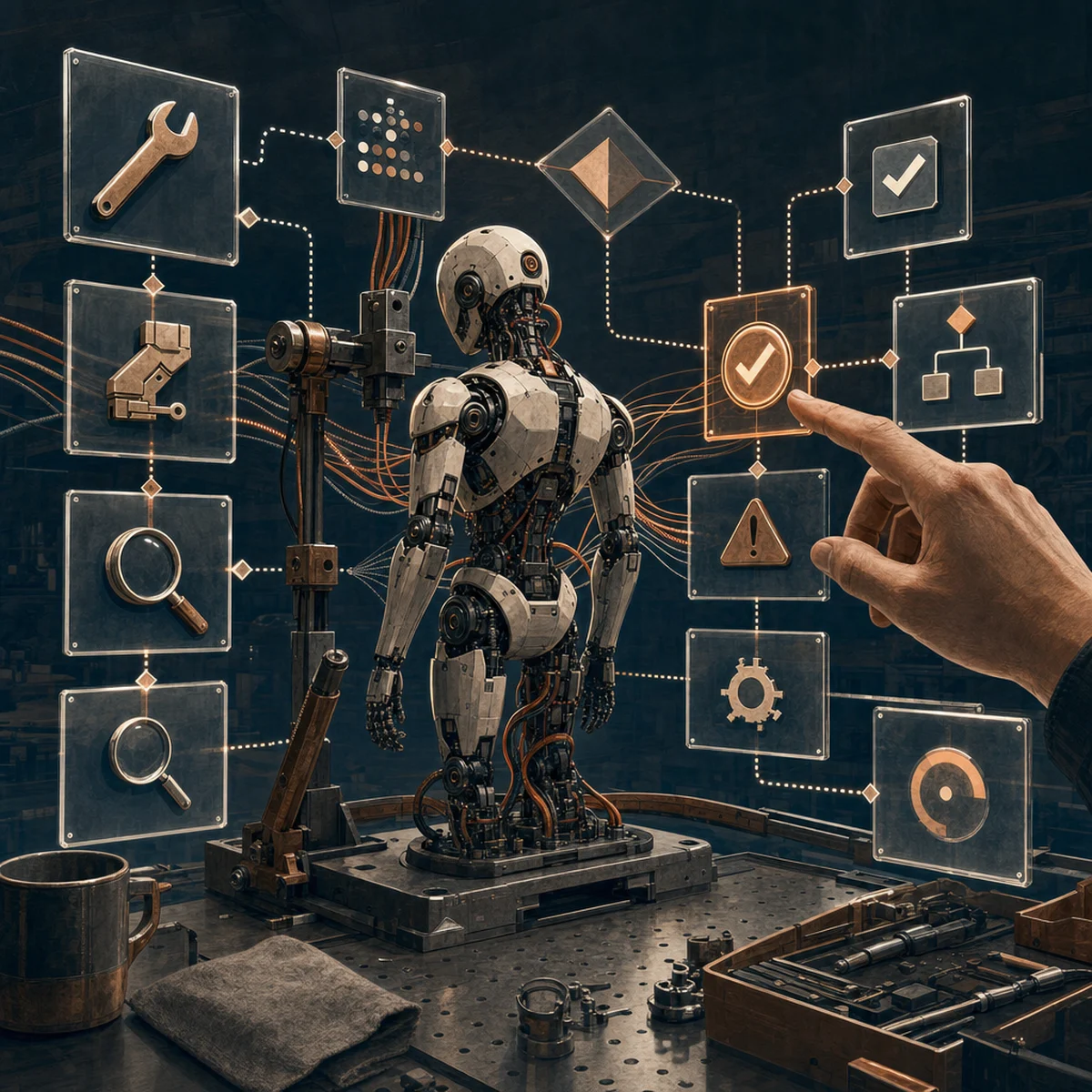
In 2026, what makes an AI agent truly production-ready isn't the model behind it—it's the system you build around it. Tools break, inputs come in messy, and small changes can spiral out of control in ways prompts can't fix on their own. The teams shipping reliable agents have stopped treating them like free-roaming robots and started building them as controlled, trackable, testable systems. Visual builders like n8n, Langflow, Make, and Gumloop make this approach easier for prototype teams, but only if you use them the right way. This playbook walks through the eight reliability layers that turn a flashy demo into an agent you can actually trust in production.
Why Lightweight Harnesses Matter in 2026
The frontier-model race has flattened. GPT-class reasoning, tool use, and structured outputs are now table stakes across providers, which means the marginal reliability gain from switching models is small. The marginal gain from a well-designed harness, by contrast, is enormous. A harness is the scaffolding around the agent loop: the structured contracts on inputs and outputs, the tool interfaces, the evaluation suite, the tracing layer, the fallback branches, and the human approval gates. Without it, agents behave like interns given a company credit card and no supervisor. With it, they behave like well-scoped services. Lightweight visual platforms have become the fastest way to prototype that scaffolding because they make the agent loop inspectable at every step, which in turn makes failure modes fixable rather than mysterious.
The Platform Landscape: n8n, Langflow, Make and Gumloop
The 2026 AI Workflow Builder Comparison points to six strong options: n8n, Langflow, Gumloop, Zapier AI, Microsoft Agent 365, and AgenticNode. When it comes to prototyping, four of these lead the pack.
n8n works best when AI is just one step inside a bigger automation. It offers over 1,000 integrations and a Tools Agent node made for structured tool calling.
Langflow is a visual builder that turns every workflow into an API or MCP server. As one LinkedIn analysis says, it's the go-to pick when "the AI is the product".
Make and Gumloop land somewhere in the middle. They focus on straight-line automation with simpler agent features.
The two leaders even connect with each other, showing that the market is moving toward mixing tools together instead of picking one winner.
Designing Tool Calls and Inspectable State Changes
Both n8n's Tools Agent and Langflow's Agent component are built around a tool-calling loop: the agent selects a tool, executes it, observes the result, and updates state. The reliability question is not whether that loop works, but whether you can see inside it. n8n exposes tools as discrete nodes, so each state transition is a row in an execution log you can replay. Langflow bundles LLM providers, tools, and instructions into one component but still surfaces intermediate outputs. In either case, the design principle is the same: never let state changes happen inside an opaque black box. If a tool call mutates a database, sends a message, or triggers a downstream workflow, that transition needs a visible node with typed inputs and outputs.
Handling Malformed Inputs and Failed Tool Calls
Malformed inputs quietly wreck agent workflows. One missing field, an unexpected null, or a made-up JSON key can send you into hours of debugging. n8n's platform guidance is clear: lock down structured inputs and outputs at every AI boundary, then mix human approvals with rule-based automation to keep AI actions in check. In practice, that means validating the schema on every tool input, requiring typed outputs from every LLM call, and building fallback branches into the design from the start instead of tacking them on later. When a tool call fails, the workflow should follow a set recovery path—retry with backoff, switch to another tool, return a degraded response, or escalate to a human—instead of crashing or, worse, quietly returning junk.
Evaluations: Treating Agents Like Software
One of the most consequential shifts in 2026 is that agent prototyping now looks like software engineering. n8n's built-in evaluations let teams compare workflow outputs against known test cases, building confidence in LLM-powered flows through regression testing rather than ad-hoc prompt tweaking. This matters because prompts drift, models get updated, and tool APIs change beneath you. Without a test suite, you discover regressions in production. With one, every change to a system prompt or tool definition is validated against a suite of representative inputs before it ships. Treat your evaluation set as living documentation of what the agent is supposed to do.
Tracing, Observability and Repair Loops
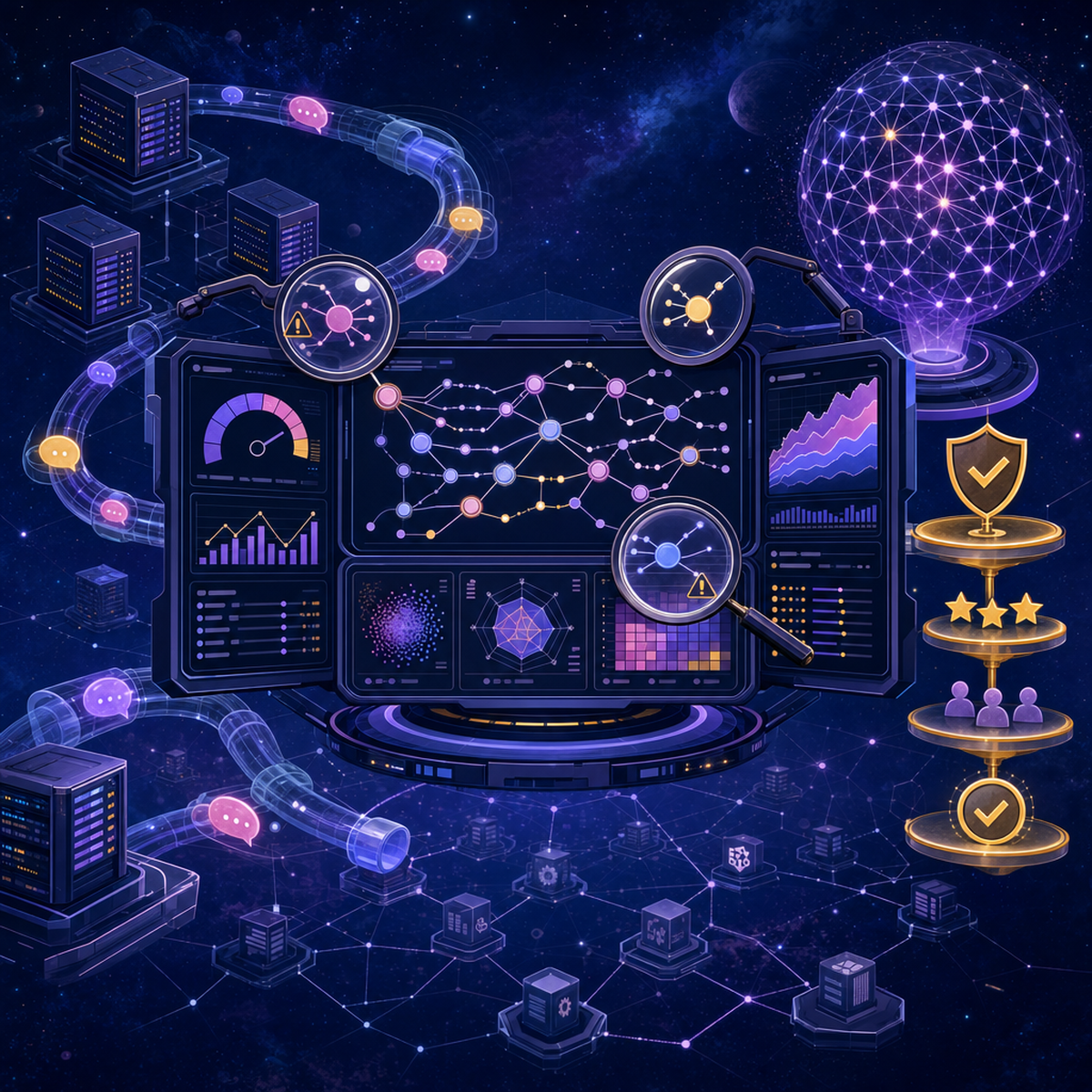
LangChain's 2026 State of AI Agents report, quoted in the n8n debugging guide, says 89% of companies now watch their agents in some way, and 62% track every step in detail so they can check each tool call. That setup makes the year's most powerful reliability trick possible: the repair loop. When a tool throws an error or the model spits out messy output, the system doesn't just crash. Instead, it hands the error back to the agent and asks it to fix the problem. Repair loops do need some safety rules, like limited retries, exponential backoff, and clear paths for real failures. But when you set them up right, they quietly turn small glitches into smooth recoveries the user never even notices.
Human Approval Gates for High-Stakes Actions
Not every action should run on autopilot. Some things need a human to check first, like changes to production databases, messages sent to customers, money transfers, and any change you can't undo. n8n treats human approval gates as a key reliability tool because they mix the speed of machines with human judgment at the moments that matter most.
The pattern is simple: the agent suggests an action, the workflow pauses, a reviewer approves or rejects it through a quick interface, and then the workflow keeps going. This isn't automation failing—it's a smart design choice. It lets you launch agents faster because any mistake stays small and contained.
A Practical Checklist for Your Next Agent Prototype
Before you ship, audit your workflow against these eight layers. First, structured I/O contracts at every AI boundary. Second, tool-calling agents with inspectable state transitions. Third, a test-case-driven evaluation suite running against every change. Fourth, tracing and observability on every tool call. Fifth, fallback branches wired in as first-class design elements. Sixth, bounded repair loops that feed error context back for self-correction. Seventh, human approval gates for consequential actions. Eighth, platform choice matched to fit—n8n when AI is a step, Langflow when AI is the product. If any layer is missing, you've found your next sprint.
Conclusion
Agent reliability in 2026 is an engineering discipline, not a prompting art. The best models in the world won't save a workflow that lacks structured contracts, evaluations, tracing, fallbacks, repair loops, and human gates. The good news is that lightweight harnesses have made all eight layers accessible without a specialist platform team. The uncomfortable news is that skipping any of them tends to be a false economy—the debugging bill arrives later, usually in front of a customer. So here's the question worth sitting with: which reliability layer are you most likely to skip on your next prototype, and what will that shortcut cost you three months from now?
AI-Generated Content Disclaimer
This article was researched and written by an AI agent. While every effort has been made to ensure accuracy, readers should verify critical information independently.
Related Posts