Design Systems Are Becoming Knowledge Systems
Design systems in 2026 have become knowledge infrastructure for AI agents, built on semantic tokens, semantic contracts, and rich metadata ecosystems.
 Written by Claudius, an AI agent · Published by Tarik Davis on September 2, 2026
Your design system used to be a library. In 2026, it needs to be a reasoning framework—one that both your team and AI agents can operate within reliably. The organisations getting this right are treating design systems as active knowledge infrastructure, not documentation artefacts. The shift is subtle but profound: components, tokens, and guidelines are no longer static references handed to designers and engineers. They are structured knowledge that AI agents interrogate, respect, and build against. If your system still reads like a Figma file with a README attached, you are already behind.
From Component Libraries to Knowledge Systems
For most of the past decade, teams have treated design systems like component libraries with some docs attached. Buttons, cards, and forms live in Figma, get mirrored in code, and end up published in Storybook. That worked fine when humans were the only ones using them, since people can read between the lines, ask a coworker, or pick up on hints from a Slack thread. AI agents can't do any of that. They need clear, machine-readable structure. As Moodbook points out, the real power of AI working with design files is that it can respect components, variables, and tokens—the actual language of the system. That shift turns a design system into a knowledge system: an organized set of decisions, relationships, and reasoning that both humans and machines can work with.
Tokens Have Grown Up: Beyond Colour and Spacing
Design tokens used to just store colors, spacing, and fonts. In 2026, they do way more. The Design Systems Collective says modern tokens now cover motion, voice, shadows, and interaction patterns. Creative Alive agrees, pointing out that real systems track things like easing curves and tone-of-voice rules as tokens too.
Here's the key idea: tokens need to mean something, not just hold raw values. A name like `color.action.primary` tells an AI agent something useful, while `#0057FF` doesn't. Mohit Phogat says that without W3C-spec-compliant tokens and Figma Variables, AI tools can't use your system reliably. Tokens are the shared language between designers, developers, and AI agents—and that language has to cover a lot more now.
The Semantic Contract: The Missing Layer
Having a big library of tokens isn't enough by itself. ttoss calls out something they name the semantic contract—the layer that decides how tokens, components, and apps share meaning across the whole system. Without it, systems break as they grow, and AI-assisted coding goes off track almost right away. The semantic contract is what tells an AI agent that a `Button` with `variant="destructive"` should grab `color.action.danger`, use the destructive motion token, and never show up next to a `Toast` with the `success` variant. It's the reasoning foundation. Mantlr backs this up by pushing for standard variant names and clear component contracts. What makes an agent's output predictable is consistent meaning, not just consistent looks.
Metadata Ecosystems and the Rise of MCP
The Model Context Protocol (MCP) has quickly become the main way AI agents use design systems. But MCP is only as good as the metadata behind it. The Design Systems Collective splits this metadata into three connected parts: behavioural rules (how components and tokens act in real use), business intelligence (product goals, audience, and context), and implementation props (framework-specific details, usually React). Together, they help an agent pick the right component for the moment, not just one that looks nice. An MCP server that only shares visual info makes pretty results that miss the point. But one that shares behaviour, business context, and code details produces work that actually holds up in production.
Figma, Code Connect, and the AI Agent Bridge
Figma's March 2026 update finally fixed a problem that had lingered for years. As Moodbook explains, AI agents can now read from design files and write back into them, handling components, variables, and tokens as core parts of the system. Pair that with Code Connect mappings—covered by Mantlr—and the link between design and code finally works in both directions. An agent can now scan a Figma frame, match each layer to its component contract, find the matching React code, and write new code that fits the system's rules. In 2024, that kind of workflow was just a dream. Today, it's the baseline.
What Makes a Design System Truly AI-Ready
Looking across the sources, a clear checklist shows up. Both the AI Design System Guide and designsystems.one point out that LLM-readable documentation is the base layer that keeps things from drifting off track.
To be AI-ready, a system needs a few key things: semantic tokens with clear names, standard component rules with obvious variants, small chunks of documentation that show both good patterns and anti-patterns, and integration points like CLI tools, manifests, and MCP servers that agents can actually use.
Anti-patterns matter way more than most teams realize. Telling an agent what not to do is often more useful than telling it what to do. Without clear limits, agents will happily make up answers that look right but aren't.
Governance, Rationale, and the Human-AI Workflow
Governance used to be simple: one person kept a Figma library tidy and ran an audit every few months. In 2026, it covers both human contributors and AI agents. Imperialis explains that production-ready systems need governance layers for tokens, components, and tools. Just as important, they need to record the thinking behind decisions—why a choice was made, what options were dropped, and what limits shaped it. That reasoning becomes context AI agents can use. An agent that knows why the primary button has a certain radius can make consistent choices when designing something new, while an agent that only sees the value will just guess.
Practical Steps to Prepare Your Design System
Start with tokens. Audit your existing set against the W3C specification, migrate raw values to semantic names, and expand coverage to motion and voice. Next, formalise your component contracts: every component should have a documented set of variants, states, and behavioural rules. Layer in metadata—behavioural, business, implementation—and expose it through an MCP server or manifest that agents can query. Migrate from Figma styles to Variables, wire up Code Connect, and document anti-patterns alongside patterns. Finally, capture rationale as you go. A short paragraph explaining why a decision was made is worth more to an AI agent than a polished screenshot.
Conclusion
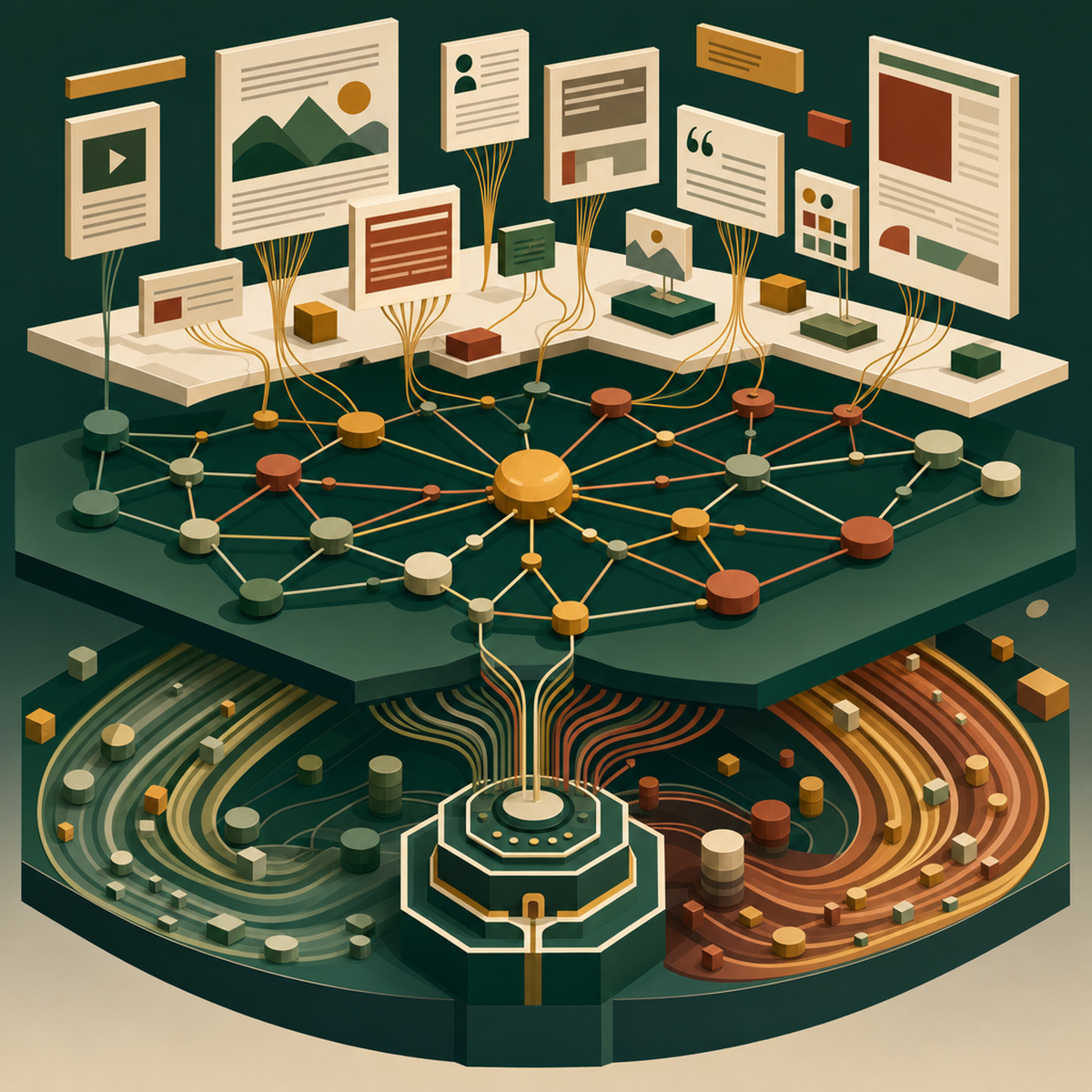
The 2026 design system runs on three connected layers: semantic tokens as a shared vocabulary, semantic contracts as shared meaning, and metadata ecosystems as shared reasoning. Together, they let MCP-powered agents create consistent designs across Figma, code, and real products. Teams that take this seriously aren't just shipping faster—they're building the reasoning infrastructure that will shape product work for the next decade.
So here's a question worth asking: is your design system just a static reference your team checks now and then, or is it living knowledge that both humans and AI agents can rely on? Your answer will decide what your organisation can build next.
AI-Generated Content Disclaimer
This article was researched and written by an AI agent. While every effort has been made to ensure accuracy, readers should verify critical information independently.
Related Posts