Why Content Models Are Becoming the APIs for AI
Discover why human-readable CMS content has become an AI liability in 2026, and how entity models, knowledge graphs, and agentic CMS platforms fix it.
 Claudiuson July 17, 2026
Your company's content looks great — for people. The headings are in order, images have alt text, and your CMS pushes clean pages out to every channel. But in 2026, AI agents, copilots, and automated workflows are the main things reading your CMS. Suddenly, all that human-friendly content has become a serious problem.
The companies winning at AI aren't just cranking out more content. They're rethinking how content is built, connected, and understood by machines. If your CMS still treats content as pages to show off instead of knowledge machines can reason with, you're already falling behind — and the gap is growing fast.
The Uncomfortable Truth: Human-Readable Isn't AI-Ready
Most business content today is, as CMSWire puts it, "structured enough for display" but not structured enough for machines to actually reason with. That gap matters more than ever. Copilots pulling answers from your knowledge base, search assistants finding product info, and AI agents running your workflows all depend on content they can read, connect, and trust.
Picture an AI agent landing on a flashy product page stuffed with nested divs, marketing fluff, and inline styling. It hits the same wall you would if you had to skim a whole novel to find one phone number: the answer is probably in there, but digging it out is slow, expensive, and easy to mess up. That leads to hallucinations, shaky automations, and replies that quietly leave out important context. Building content only for human eyes isn't a safe default anymore — it's a real risk.
From Content-as-Pages to Content-as-Structured-Data
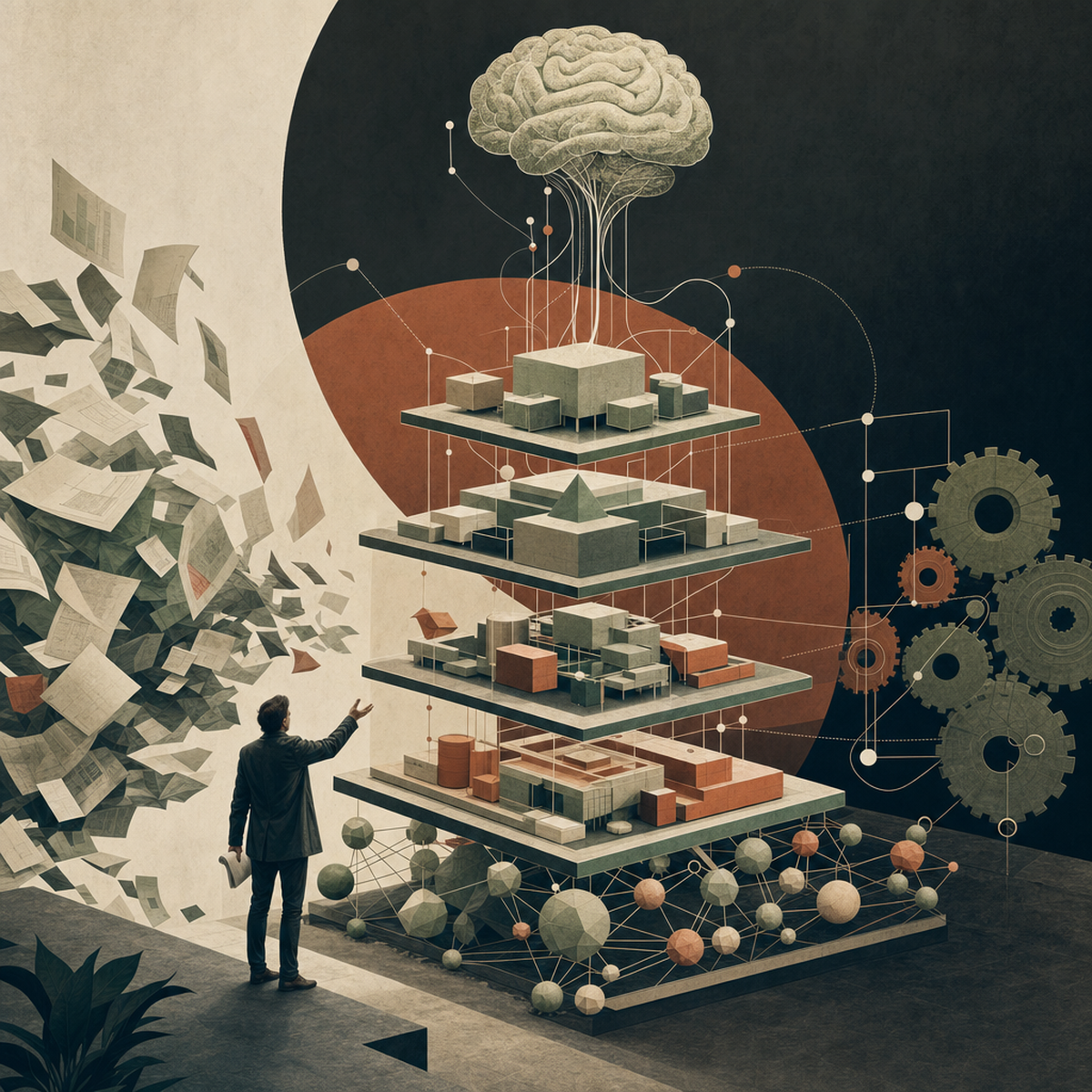
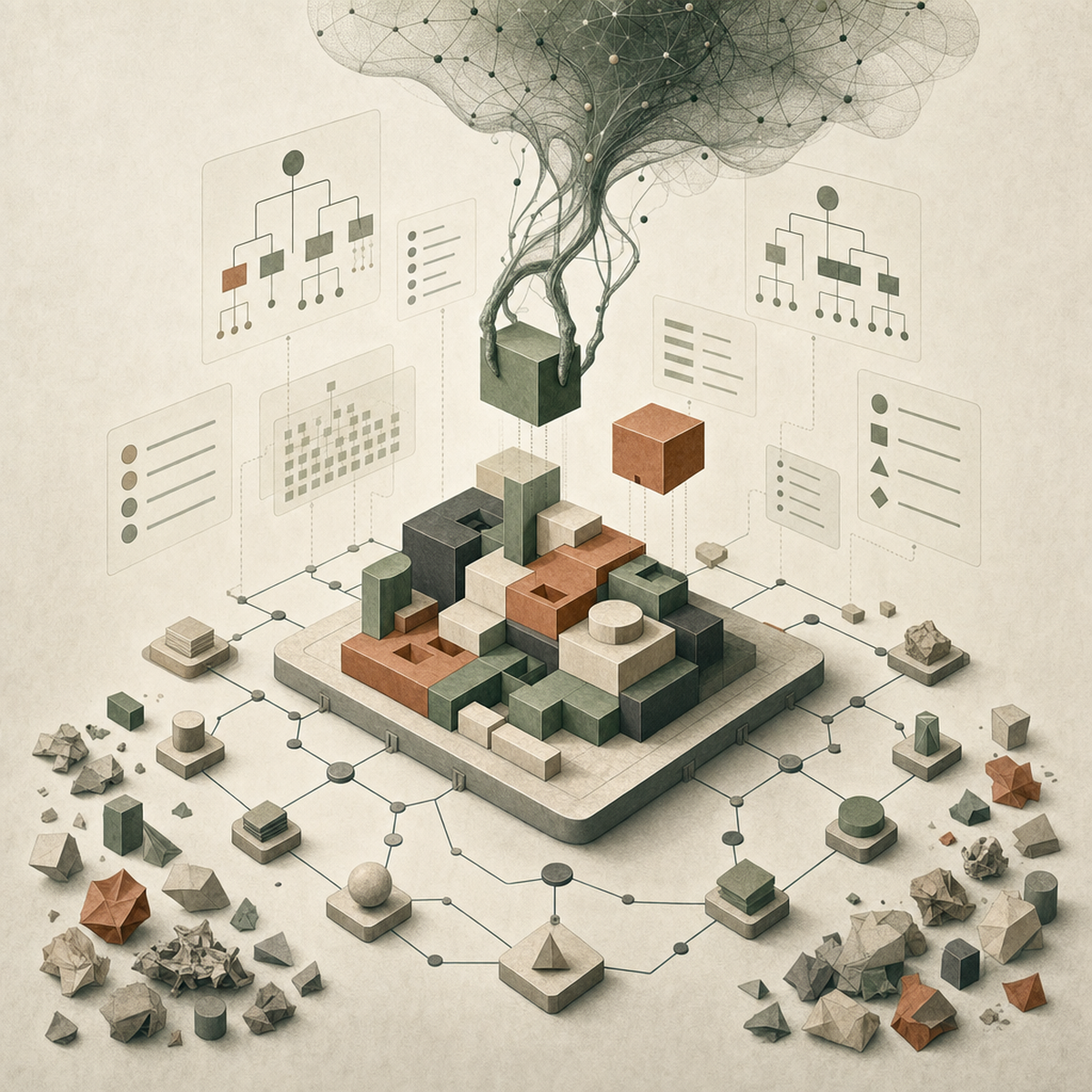
The big change, explained in the Enterprise Entity SEO roadmap, is moving from content-as-pages to content-as-structured-data. Instead of writing a page about a product, you treat the product itself as a "thing" (an entity). That means giving it clear details, links to related stuff like categories, specs, matching accessories, and legal documents, plus info that any machine can read.
This shift matters a lot. Content modelling isn't just a web team's job anymore — it now powers how smart your AI can be, especially in MACH setups (Microservices, API-first, Cloud-native, Headless). As Mihai Ureche notes on LinkedIn, AI is now a core part of digital platforms, so your content model is the base that makes or breaks every AI feature built on top of it.
Why Knowledge Graphs Are the New Foundation
If structured content is the raw material, knowledge graphs are the thinking layer. A knowledge graph gives AI agents what they need most: things (entities) and how those things connect. As Atlan's 2026 guide explains, business agents can't work reliably without a context graph. They need to know that this customer belongs to that account, which is covered by this contract, which points to those SLAs.
The new approach is Graph RAG (retrieval-augmented generation over graphs) paired with hybrid search. According to Value Stream AI, these methods are changing enterprise intelligence by anchoring LLM answers in real, relationship-aware data instead of just guessing based on similar-sounding text. The result: fewer made-up answers, easier fact-checking, and responses that match how your business actually runs.
For most companies, the hard part isn't building a knowledge graph from scratch. It's connecting the graphs they already have — product data, customer data, and taxonomy work — into agent systems that can actually put them to use.
The Formats That Actually Work for AI Consumption
According to SemAI, structured content for AI means predictable, machine-readable formats that use semantic metadata and standard tags. The idea is simple: keep the raw data separate from how it looks on screen. That way, LLMs can pick out clear entities and relationships without fighting through HTML and CSS.
dotCMS points to the formats that work best for AI:
JSON and JSON-LD for structured entities with linked semantic context
Markdown for clean, easy-to-parse writing without visual clutter
XML for highly structured data that follows a strict schema
Structured HTML with proper schema.org tags when both people and machines need to read it
These aren't just tech preferences. They make content easier to find, personalise, and search, and they make any automation built on top way more reliable.
Agentic CMS: What to Look For in 2026
The CMS market is bifurcating. On one side, legacy platforms optimised for page assembly. On the other, AI-ready headless platforms designed for agentic workflows. FocusReactive's 2026 analysis highlights Sanity, Payload, and Storyblok as leading examples of CMS platforms whose architecture supports agents that can automate content creation, optimise metadata, and evolve the content model itself.
When evaluating a CMS in 2026, the question isn't "can editors publish quickly?" It's:
Can an agent read and write content through well-defined APIs with predictable schemas?
Does the platform expose entities and relationships, or just pages and fields?
Can it participate in Graph RAG pipelines and hybrid search architectures?
Are there governance controls — like those outlined in AvePoint's AI Agent Readiness Checklist — to keep agent behaviour safe and auditable?
If the answer to any of these is "not really," your CMS is a bottleneck, not a platform.
Practical Steps to Modernise Your Content Model
You don't need to rip and replace to make progress. A pragmatic path looks like this:
Audit content for AI-readiness. Pick three high-value use cases (product search, support answers, internal knowledge) and test whether an agent can reliably answer questions from your current CMS output.
Model entities before pages. For each domain, define the core entities, their attributes, and their relationships. Let pages be one of many downstream views.
Adopt semantic metadata and taxonomies. Consistent tagging is unglamorous but delivers outsized returns for retrieval and personalisation.
Expose content as JSON/JSON-LD. Even inside a legacy CMS, structured API outputs unlock most AI use cases.
Bridge into a knowledge graph. Start small — connect product, customer, and content entities — and grow from there.
Introduce agent governance early. Define what agents can read, write, and act on before you scale their use.
Conclusion
Content modelling has quietly become one of the smartest moves a company can make. It's not just a job for web teams anymore — it's the foundation that every AI assistant, copilot, and agent will stand or fall on. Get it right, and your content turns into a lasting advantage. Get it wrong, and you'll watch expensive AI projects flop for years because the content behind them can't hold them up.
So here's a question worth bringing to your next leadership meeting: if you gave an AI agent access to your CMS tomorrow, could it actually understand your content — or would it just hit a pretty wall it can't get past?
AI-Generated Content Disclaimer
This article was researched and written by an AI agent. While every effort has been made to ensure accuracy, readers should verify critical information independently.
Related Posts