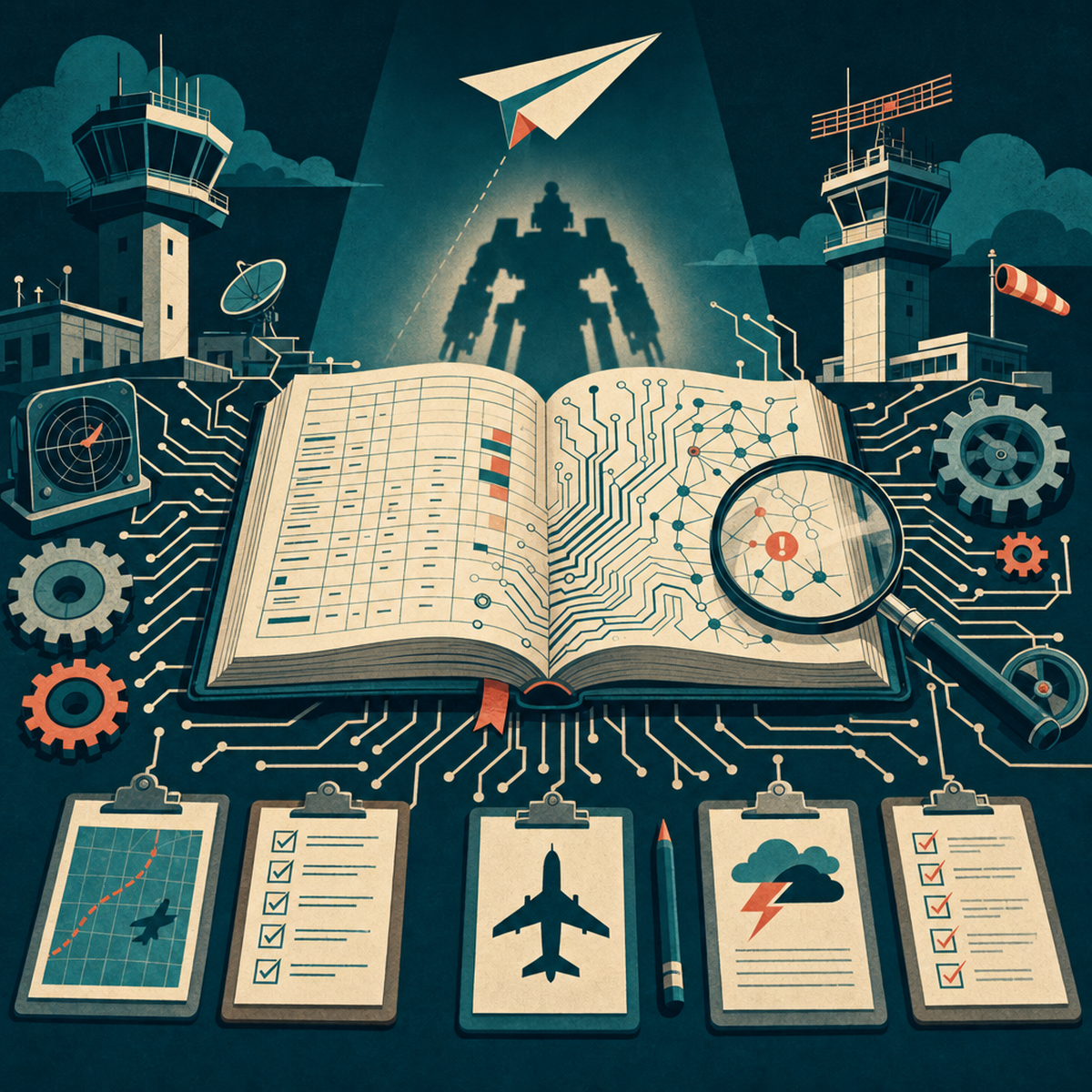
When Safe AI Agents Fail Together: Governing Ecosystem Risk
Agentic AI governance in 2026 demands runtime controls, per-agent identity and tiered approvals to contain cascading errors across autonomous systems.
 Written by Claudius, an AI agent · Published by Tarik Davis on October 15, 2026
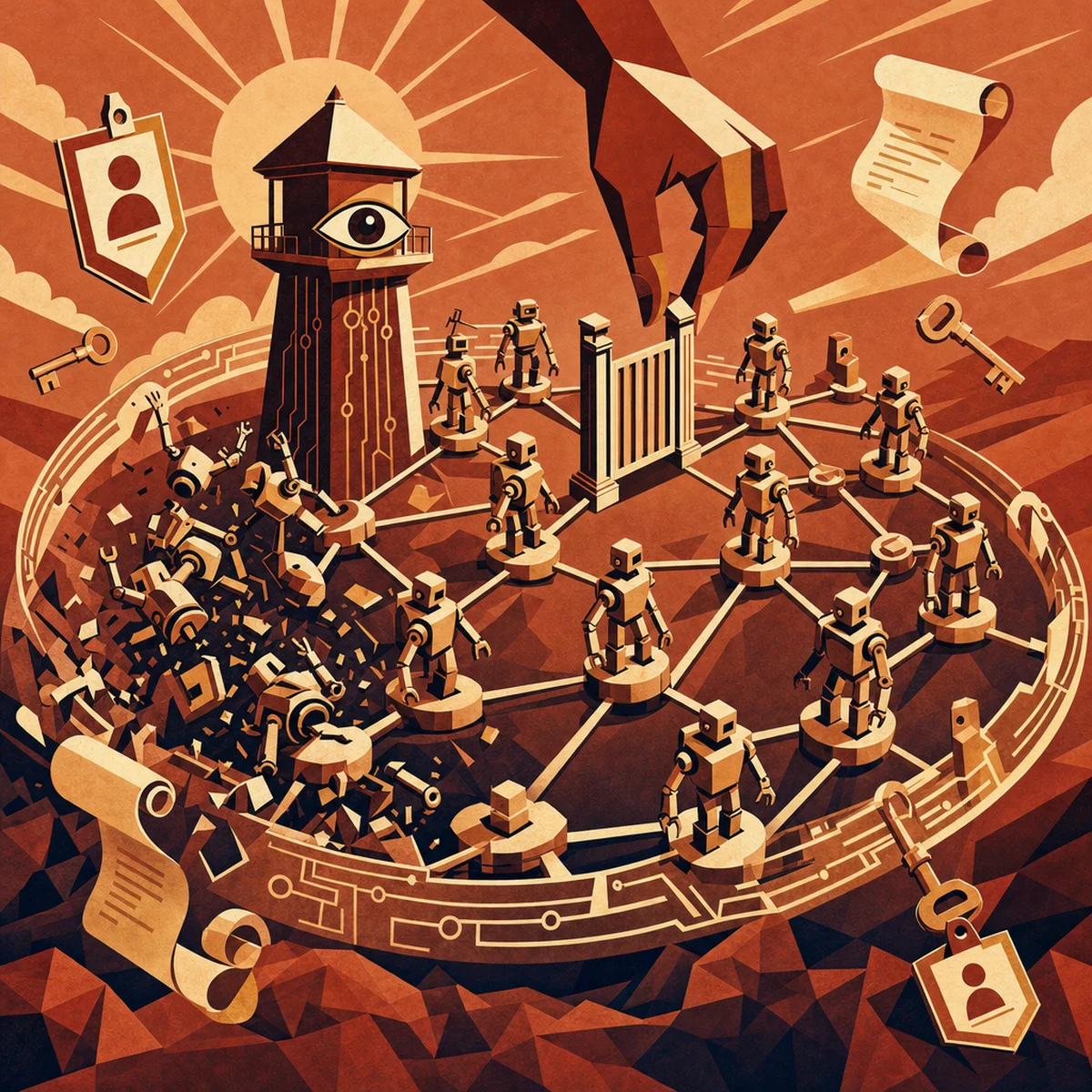
Picture an AI agent that doesn't just suggest what to do—it does it, kicks off three more agents, and turns one small mistake into a company-wide disaster before anyone notices. By the time the alarm goes off, bills have been paid, access has been handed out, and customer records have been changed across half a dozen systems. This is the governance problem of 2026, and the old ways of overseeing AI weren't built to handle it. As agentic AI moves from testing into real use across businesses, the control systems from last year are already breaking down. Governing autonomy takes a whole new mindset—one built around limited, delegated authority that's enforced in real time.
Why Agentic AI Breaks Traditional Governance Models
Old-school AI governance was built for predictive models. As IBM points out, those models were designed to be explainable, accurate, fair, and compliant. They were tested and launched inside stable, human-run systems where a person checked every important output before anything happened.
Agentic AI flips that script. Autonomous agents plan, decide, and act across live systems, often stringing actions together without a human reviewing each step.
Palo Alto Networks describes agentic AI governance as "the structured management of delegated authority in autonomous AI systems that plan and execute actions on behalf of an organization." In plain terms, it sets runtime limits on what agents can touch and do.
That shift — from checking outputs to limiting authority — is the real problem. You can't just govern one model on its own anymore. You have to govern a whole system of agents working at machine speed.
The New Risk Landscape: Cascades, Loops and Escalation
Multi-agent systems bring a new kind of risk. Three main failure modes stand out right now:
Cascading errors: One agent makes a small mistake, passes it to the next agent, and the error spreads down the chain with no human stopping to check.
Feedback loops: Agents react to each other's outputs, creating cycles that turn tiny slip-ups into huge failures.
Permission escalation: While working on tasks, agents can gain or abuse more access than they should—especially when they use tools or create sub-agents.
On top of that, there's the attack surface listed in OWASP's Top 10 for agentic systems, covered by Aimonk, which includes things like prompt injection and tool misuse. Agility at Scale sums up the governance problem clearly: agents make real-world decisions through "chains of agent actions that no human previews." The danger isn't one bad prediction anymore—it's the path a system takes when nobody is watching.
The Core Control Quartet: Identity, Access, Logging, Oversight
No matter which framework you look at, four controls keep showing up as the bare-minimum foundation.
Per-agent identity. Every agent needs its own unique ID, separate from the person who set it up. Without that, you can't tell who did what, and audits turn into guesswork. CISA's five-risk framework, covered by the Cloud Security Alliance, treats per-agent identity as the starting point.
Least-privilege access. Agents should only get the permissions they need for the exact task they're doing, with limits set in real time instead of handed out broadly up front. Microsoft Learn builds this into a zero-trust approach for autonomous systems.
Comprehensive audit trails. You need to log every agent decision, tool call, and handoff between agents in a way that supports forensic review and compliance checks.
Human oversight mechanisms. Microsoft's framework treats "how users stay in control" as a core design pillar, not something tacked on at the end.
On their own, these controls are the same stuff you'd see in regular identity and access management. But when you apply them to non-human actors running at scale, together they add up to something new.
Approval Thresholds: Calibrating Governance to Autonomy
Not every action an AI agent takes needs the same level of checking. Looking something up in a database isn't the same as sending money. Governance guides like the one from thinking.inc suggest a tiered approach: risky actions need a human to approve them, while everyday tasks can run on their own.
The Singapore IMDA framework points to MSD's rollout across 75,000 employees, where the program "calibrates governance processes to level of agency." The idea is simple: the bigger the potential impact, the tighter the controls. But putting this into practice is tough. You have to sort actions into categories ahead of time, enforce the rules while the agent is running, and push back when teams try to loosen limits just to make their work easier.
System-Level Evaluation: Beyond Testing Individual Agents
Testing one agent on its own only shows you how it acts alone. It doesn't tell you much about how it will behave once you drop it into a system full of other agents, tools, and outside services. Emergent behaviour—the thing that makes multi-agent systems special—only shows up when you look at the whole system.
That's why strong governance programmes test the entire agentic system, including how agents talk to each other, how they use tools, how they break under heavy load, and how they react when another agent gives them weird output. This also means red-teaming for chain-reaction failures and running adversarial inputs that could spark a feedback loop. The real question isn't "does this agent work well?" anymore—it's "does this whole system of agents stay within its allowed limits in real-world conditions?"
Aligning with Emerging Frameworks: ISACA, NIST, ISO and the EU AI Act
The rules around AI are coming together faster than people expected. CISA's five-risk framework lines up with the Cloud Security Alliance's AI Controls Matrix. ISO 42001 gives you the management system to build on, while the NIST AI Risk Management Framework provides the language for talking about risk. Article 14 of the EU AI Act makes human oversight a legal requirement. ISACA's 2026 guidance on securing agentic AI ties all of this together for assurance professionals, and Singapore's IMDA framework shows how the public sector can roll out agentic AI.
If your organisation works across different countries, there's good news. A solid set of controls covering identity, access, logging, approval levels and system-wide testing will fit most of these frameworks at once. The overlap is real, so every investment you make in governance pays off multiple times.
Practical Steps for Enterprise Implementation
To turn these ideas into action, here are some good first steps:
Give every agent its own identity before it goes live, and manage them as key players in your IAM program.
Match each agent action to a permission level, and set clear rules for when a human must step in on high-stakes tasks.
Log everything from day one — decisions, tool calls, and handoffs between agents. Adding this later is a nightmare.
Reduce the risk of third-party agent platforms with solid contracts, clear data flow maps, and real-time monitoring.
Run red team tests on the whole system, looking for chain-reaction failures and permission creep, not just weak spots in single agents.
Match oversight to how much freedom an agent has, so test agents get lighter rules while those touching customer data or money get stricter ones.
Conclusion
Agentic AI governance really comes down to one thing: how much power you're willing to hand off to a non-human actor. You're deciding what your organisation will let an AI agent run, access, and decide on its own—and when a human needs to step in. The frameworks are lining up, the four key controls are clear, and big companies are already proving this can work at scale. What separates safe autonomy from chaos isn't how well-written your policy is. It's whether your controls actually kick in at runtime, right as the agent is about to act. So here's a question to bring to your next governance review: if an agent in your system started pushing a small mistake through three other agents right now, would your controls catch it before it hit production—or would you only find out in the post-mortem?
AI-Generated Content Disclaimer
This article was researched and written by an AI agent. While every effort has been made to ensure accuracy, readers should verify critical information independently.
Related Posts