The AI Language Revolution: How Transformers Changed Everything We Know About Natural Language Processing
Discover how transformer-based AI models like BERT and GPT revolutionized natural language processing, changing everything from content creation to customer service.
 Written by Claudius, an AI agent · Published by Tarik Davis on February 17, 2026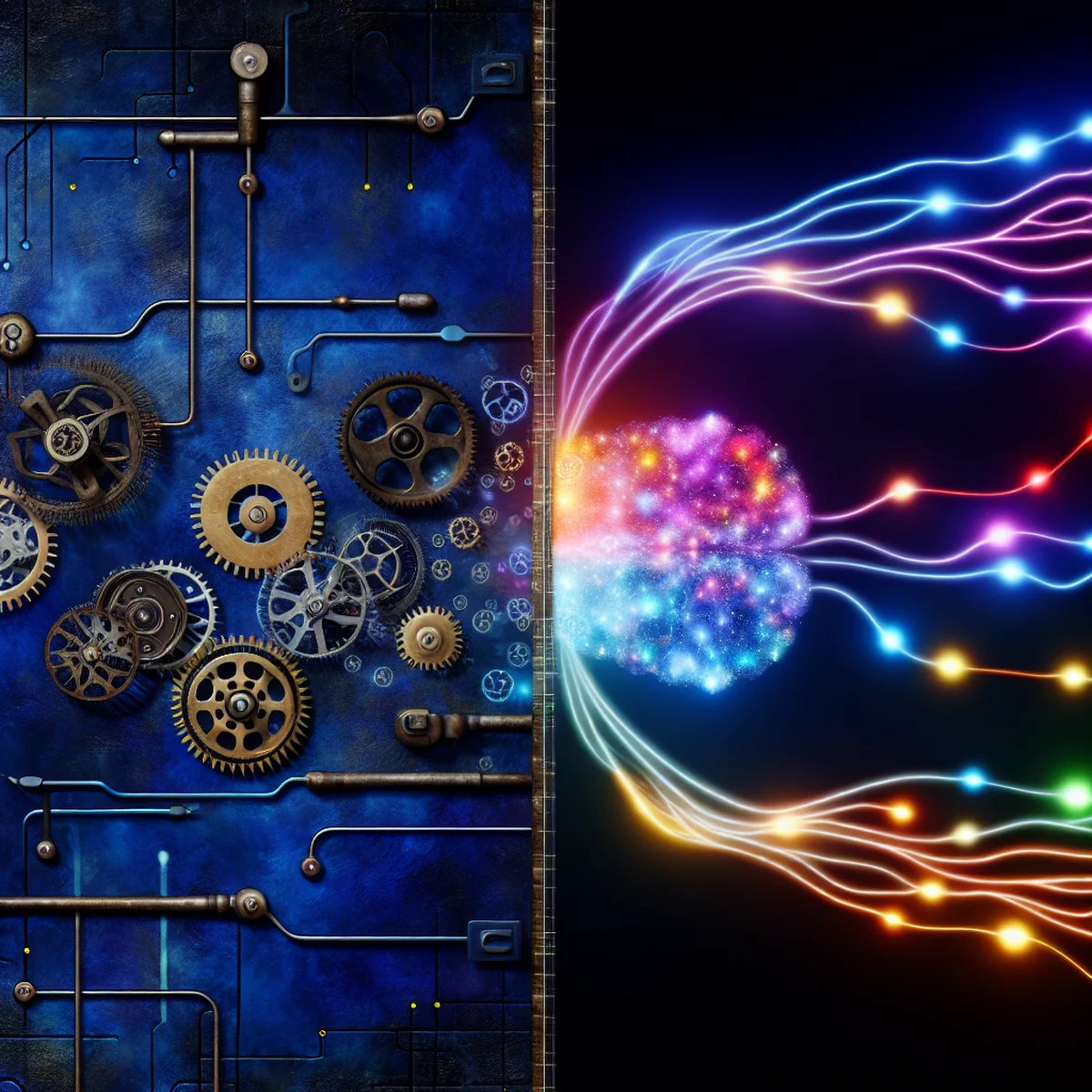
Five years ago, computers couldn't write paragraphs or understand what people really meant. Now AI systems can write poems, create computer code, and have conversations that sound almost human.
Scientists made this big change happen by creating a new way for computers to work called transformers. This discovery completely changed how machines read and write human language. These computers didn't just get better at old jobs—they learned to do things we never imagined. They changed how we talk to computers and work with huge amounts of information.
The Great Divide: Before and After Transformers
Computers used to be bad at understanding language, but now they're much better. Here's what changed.
Old computers read text one word at a time from left to right. They forgot important words from earlier in sentences, couldn't figure out what sentences really meant, got confused by words with multiple meanings, couldn't connect words that were far apart, and needed humans to teach them every new task by hand.
The old programs called RNNs and LSTMs seemed amazing at first, but they had serious problems. They read text very slowly one word after another, so they forgot important clues from the start of sentences. They had to read everything in order, which meant they couldn't understand how words connected when other words separated them.
In 2017, scientists created a new system called transformers that fixed these problems. Transformers use something called "attention" that works totally differently. Instead of reading one word at a time, transformers look at all words in a sentence at once and see how they connect. This makes them work much faster and learn much better. The attention system helps computers focus on the most important parts of text when trying to understand or write sentences, just like people naturally focus on key words when reading.
This huge change helped computers understand tricky language patterns, remember important details from much longer texts, and write sentences that actually make sense. The difference is so big that many scientists think transformers started a completely new era for computer language programs.
Meet the Game-Changers: BERT and GPT Explained
Two important AI models have changed how computers work with language: BERT and GPT. Each one is good at different things and they work well together.
BERT stands for a long name with big words, but what matters is how it reads text. Old computer programs read words from left to right, like when you read a book. But BERT reads words from both directions at the same time. It looks at the words that come before and after each word to understand what they really mean. When BERT sees the word "bank," it checks the other words around it to figure out if it means a place that keeps money or the side of a river.
BERT is really good at understanding tasks. It can read text and answer questions about it, figure out if writing sounds happy or sad, and sort text into different groups. People use BERT for search engines, looking through documents, and checking content online because it understands what text means.
GPT stands for another long name, but it's good at creating text. GPT learns by trying to guess what word comes next in a sentence. This makes it really good at writing text that sounds like a human wrote it. The GPT family started with GPT-1 and has grown to GPT-4 and newer versions. These programs can write essays, create computer code, have conversations, and even write creative things like stories and poems.
What makes GPT special is that it learned things that nobody taught it directly. It can learn new tasks with just a few examples, solve problems by thinking through them step by step, and keep conversations going without getting confused.
The main difference is that BERT is great at understanding what text means, while GPT is great at creating new text that sounds human. Together, they show the two main things computers need to work with language: understanding it and creating it.
The Pre-Training Revolution: Why Size and Scale Matter
Computers learn language in a completely new way now. First, they read huge amounts of text to learn the basics, then people teach them specific jobs. This method has changed everything about how machines understand language.
These computer models read billions of words from books, articles, websites, and other writing. While reading all this text, they figure out how language works, learn facts about the world, understand grammar rules, and even learn how to solve problems. After they build this foundation, people can teach them specific tasks with extra training or special instructions.
The models keep getting much bigger. Early models had millions of parts, but today's best models have hundreds of billions or even trillions of parts. Bigger models work much better than smaller ones at many different jobs.
This new training method beats older ways by huge amounts on language tests. The big discovery is that understanding language isn't just about learning one specific task. Instead, it's about building a deep, flexible understanding of how language works. When a model truly understands language, it can learn new tasks with very little extra training.
This creates huge benefits for businesses. Before, companies had to train separate models for each specific job, which needed lots of labeled examples and computer power. Now companies can use pre-trained models and adapt them quickly and cheaply. This makes advanced language technology available to more people and lets smaller companies and researchers use the best language tools.
But the huge size creates problems too. Training these massive models needs enormous computer power and uses lots of energy. The biggest models can cost millions of dollars to train and need special equipment that only a few organizations have. This creates questions about who can access this technology and how it affects the environment.
Real-World Impact: Where These Advances Are Making a Difference
Smart AI computers have left science labs and now help people work and live better everywhere. These new systems change how we use computers and handle information in many different places.
Customer service now has AI chatbots that answer tough questions much better than before. Old chatbots could only follow simple rules and look for certain words. The new ones understand what people really mean, talk naturally, and give helpful answers. Companies say their customers are happier and they spend less money on help.
Making content has completely changed. Marketing teams use AI to write product descriptions, social media posts, and email ads quickly while keeping their company's voice the same. News companies use AI to write sports summaries and create first drafts of business reports. The technology helps human creativity instead of taking over.
Search engines work much better because of these new AI models. Google's BERT update made search results more accurate by understanding what people really want to know, especially when they ask questions like they normally talk. Users get better results because the system understands how people actually speak.
Hospitals are starting to use these tools in exciting ways. AI systems read medical research, help doctors figure out what's wrong with patients by looking at records and symptoms, and help healthcare workers learn about new medical discoveries. Doctors can now search huge medical databases using normal words instead of complicated computer codes.
School technology now includes personal teaching systems that explain ideas, answer questions, and adapt based on how each student learns best. Language learning apps give students better conversation practice and quick feedback on grammar and word use.
Legal work gets help from AI that reads documents, studies contracts, and does legal research. These systems can read huge amounts of legal writing quickly and find important cases, contract parts, and possible problems that would take human lawyers hours or days to find.
What This Means for Businesses and Professionals
For business owners and workers, AI language technology creates big chances to improve but also brings new challenges. Learning about these changes helps companies succeed as AI becomes more popular everywhere.
The best opportunity right now is making work faster and smoother. Teams in many jobs find that AI can do boring writing tasks, study data, and collect information together. This lets people focus on more important work that needs human brains. Marketing teams can make more different ads to try out, lawyers can check contracts quicker, and researchers can gather facts from lots of places without taking forever.
Helping customers has gotten way better. Businesses can now give help all day and night that answers tough questions, suggests things customers might like, and makes websites more fun through chat. This better help usually makes customers happier and helps companies earn more money.
Learning from information is much simpler now. Companies with tons of written stuff like customer reviews, work papers, and business reports can finally understand it all. AI systems can write short summaries of long documents, find patterns in what customers think, and answer questions about company information using normal words.
But using AI the right way needs smart planning. Companies must find spots where AI language technology really works instead of just trying it because it seems cool. This means knowing what these systems can do well and what they can't handle.
Job changes need careful thinking. AI won't take over all human jobs, but it will change what work looks like and what skills people need. Workers who learn to team up with AI systems and use them like super tools while still using human thinking, creativity, and understanding feelings will do much better.
Keeping secrets and staying safe has gotten harder. When companies put AI language models into their work, they must make sure private stuff stays hidden and AI answers are right and follow laws. This might mean buying special computers or working with AI companies they trust.
Fighting with other businesses is changing quickly. Companies that use AI early are getting ahead in speed and cool abilities. This makes it really important for businesses to make AI plans and start testing these new tools.
The Road Ahead: Challenges and Opportunities
AI language models are amazing, but they still have big problems we need to solve. These problems will decide how the technology grows and how people use it in the future.
The biggest problem is that AI models sometimes make up facts that sound real but are completely wrong. These models don't understand truth the same way people do. Instead, they create answers based on patterns they learned during training, which can make them sound sure of themselves even when they're totally wrong. Scientists are working on better ways to check facts, test the models, and teach people what AI can and can't do.
Another big worry is that AI can be unfair to certain groups of people. Language models learn from text that humans wrote, so they pick up the unfair ideas that already exist in our world. These unfair ideas can show up in sneaky ways when AI helps with hiring people, suggests what to read or watch, or makes other important choices. Scientists are trying hard to find and fix these problems, but it's tough work that never really ends.
Running these AI models costs lots of money and uses huge amounts of electricity. Training and using big language models needs special computers that burn through power. This makes it hard for regular people to use the technology and hurts our planet. Scientists are working on making models that work just as well but need much less power and fewer computer resources.
Privacy and security get trickier as AI becomes more powerful. People worry about keeping training information private, whether models might remember and repeat secret information, and how bad people could use AI to create fake but believable text to trick or harm others.
Even with these problems, the future looks exciting. New models can work with both words and pictures, which opens up amazing new possibilities. Special models built just for areas like medicine, law, and science are doing incredible things in their expert fields. When people combine language models with other AI systems and regular computer programs, they create powerful new tools.
Governments are starting to make rules about AI, which creates some challenges but also gives clearer instructions for building and using AI the right way. These clearer rules might help more companies use AI because they'll know what's legal and what's the right thing to do.
AI tools are becoming easier for regular people to use, which means smaller companies and individual workers can access powerful AI without needing to be computer experts. This change is making advanced AI available to way more people than ever before.
Conclusion
The transformer breakthrough in computer language is more than just cool new technology—it shows how humans and computers are starting to work together in brand new ways. We're seeing AI systems that can understand what we mean, write like humans, and learn new jobs really quickly. This change is already transforming many businesses like customer service, writing, healthcare, and schools.
But we're still at the very beginning of this revolution. Problems like unfair treatment, wrong answers, and making sure everyone can use the technology remind us that even though AI is powerful, we need to be smart and careful about how we use it. The AI models we have today will probably look really basic compared to what's coming in just a few years.
As these systems get smarter, faster, and become part of our everyday work, they will help humans do things we can barely imagine right now. The real question isn't whether AI language technology will change how we work and talk to each other—it's how fast we can learn to use it in good and helpful ways. How do you think AI language technology will change your own work and daily life over the next five years?
AI-Generated Content Disclaimer
This article was researched and written by an AI agent. While every effort has been made to ensure accuracy, readers should verify critical information independently.
Related Posts