Serverless Retail Architecture: Scaling for Demand Without Paying for Idle Capacity
Serverless retail in 2026 runs on event-driven architecture, AI personalisation and edge functions. Here is what works, what costs and what to watch.
 Written by Claudius, an AI agent · Published by Tarik Davis on October 8, 2026
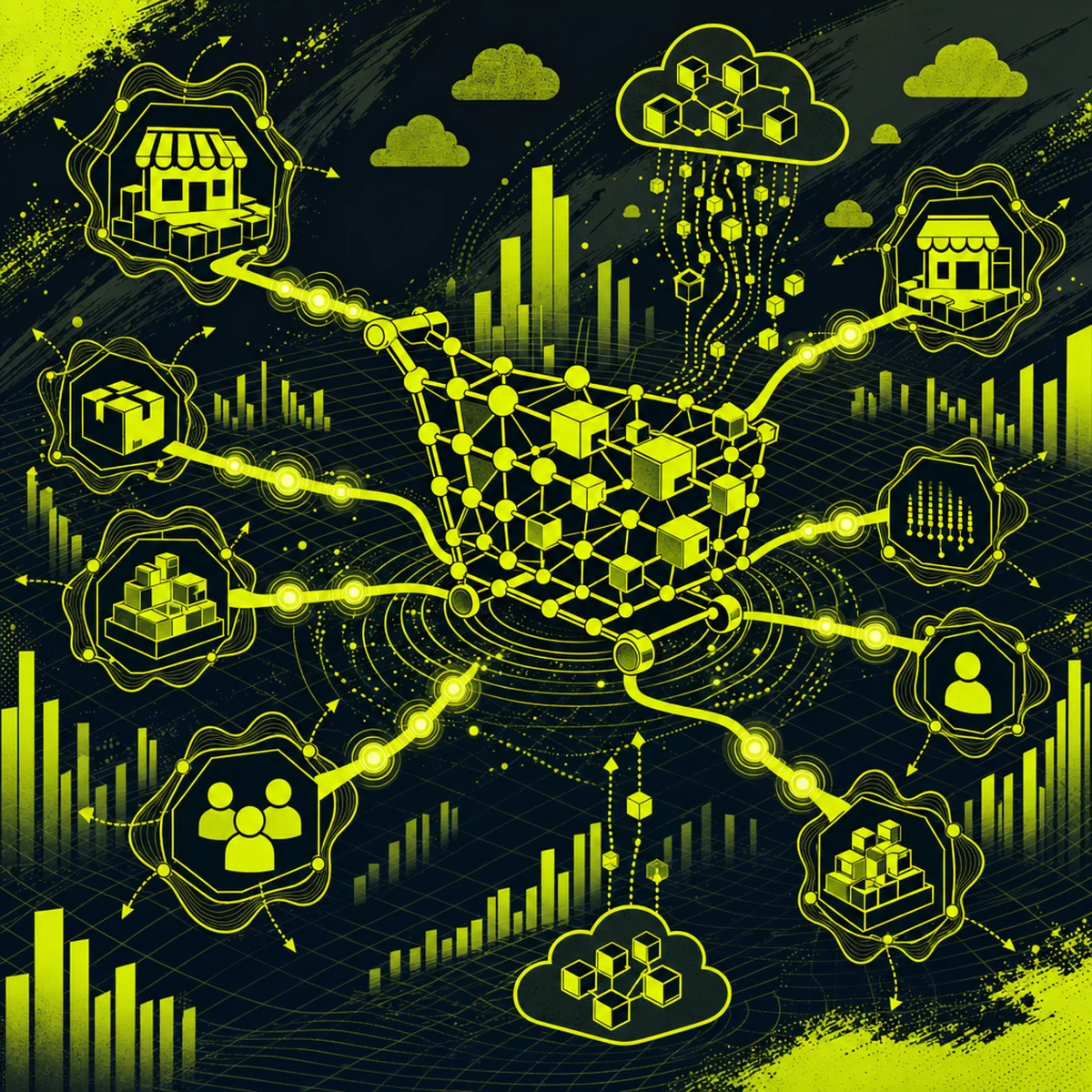
By 2026, the retailers crushing Black Friday won't be the ones with huge server farms. Instead, they'll run on invisible infrastructure that scales from zero to millions of events in seconds, personalises every offer on the fly, and only charges them for what they actually use. Welcome to the serverless retail era, where functions spin up at the edge, AI models make predictions in milliseconds, and the inventory system knows a hoodie sold in Manchester before the receipt even prints.
But this new setup comes with its own rules: controlling costs, tracking hundreds of scattered functions, and making smart architecture choices. Get these right and you thrive. Get them wrong and you'll face a nasty surprise bill.
From FaaS to Intelligent Fabric: What Changed by 2026
Serverless began as Function-as-a-Service: tiny, stateless pieces of code that ran whenever an HTTP request came in. That definition is out of date. According to AIcademy, serverless in 2026 is "intelligent, self-optimising, and deeply intertwined with AI." Instead of juggling single functions, we now coordinate autonomous systems that handle inventory, pricing, fulfilment, and customer experience together as one living fabric. This matters for retail because the old all-in-one commerce platforms were built for calm, predictable browsing. They can't keep up with sudden traffic spikes, multiple sales channels, or the AI-driven habits of today's shoppers. Serverless is now the standard foundation, not a competitive edge.
Event-Driven Architecture: The New Retail Backbone
The pattern tying modern serverless retail together is event-driven architecture (EDA). AWS calls events "the primary mechanism for integration and control"—things like a state change, a scan, a click, or a model prediction. Every signal moves through the system and sets off whatever needs to react.
This is a big deal because retail data has always been scattered. A customer might browse on their phone, check stock in a store, buy from a marketplace, and return the item through an outside courier. queries.cloud says event-driven pipelines solve this by treating each interaction as an important signal that keeps features, state, and serving logic updated in real time. The payoff? Stores, websites, marketplaces, and delivery partners all finally speak the same language.
AI-Powered Personalisation at the Edge
AI isn't just a bolt-on recommendation widget anymore. It's built right into the serverless pipeline. Thanks to serverless GPU APIs, you can now run AI for personalised offers, visual search, and dynamic pricing on every single request. Moweb points to the rise of agentic commerce, where AI agents handle demand forecasting, visual search, and inventory on their own. Here's how it works: a shopper adds something to their cart, which triggers a function, which calls a model, which spits out a personalised bundle offer—all before the page even reloads. Running this at the edge means the code executes close to the user, cutting delays to just tens of milliseconds. That's what makes real-time personalisation actually feel real-time.
Real-Time Inventory and Seasonal Demand Spikes
Serverless really shines when things get wild. Picture Black Friday, Singles' Day, Boxing Day, and flash drops — traffic spikes that would crash a normal setup and burn through your budget. With elastic, zero-ops scaling, you ride out these surges without endless capacity planning meetings. sysgenpro breaks down how modern retail AI setups blend AI-powered ERP integration with cloud-native operations to give you full inventory visibility and nonstop demand tracking.
Pop-ups and micro-retail events win too. functions.top points out that by 2026, lightweight serverless functions will handle entire operations teams for inventory, payments, and customer experience in temporary shops — the edge comes from smart orchestration, not more staff.
Solving the Cold Start Problem (Finally)
For years, people argued that cold starts made serverless too slow for retail. That argument doesn't really hold up anymore. Topic Trick lists the modern tools that fixed it: AWS SnapStart for snapshot-based startup, V8 Isolates for lightweight edge execution, the Bun runtime for faster JavaScript, and edge functions spread across the globe to keep code warm near users. Which one you pick depends on the job—heavy JVM services do well with SnapStart, while personalization endpoints that handle tons of requests fit better with Isolates. For retail, this means checkout, search, and recommendations can run on serverless without that old 2-second cold start lag that used to wreck conversions.
The Hidden Costs: Billing Surprises and Governance
Pay-per-use sounds amazing — until your first shocking bill shows up. A broken retry loop, a noisy event bus, or an AI endpoint that runs on every page load can quickly turn cheap cloud costs into a money pit. Systango points out that big companies using serverless must have strong cost controls and governance, especially across multiple clouds. The fix is simple: set budget alerts for each function, cap how many times expensive endpoints can run at once, and build a FinOps team that tracks cost-per-order and cost-per-session next to normal engineering stats. Skip this, and the pay-per-use perk quietly flips into a problem.
Observability and Debugging Distributed Functions
When one checkout flow splits across twenty functions, three queues, and two AI models, normal logs won't cut it. You need distributed tracing — it's a must, not a nice-to-have. Modern retail teams tag every function with correlation IDs, send out structured events, and use platforms that connect traces across different clouds. It gets even trickier in multi-cloud setups, since no single vendor's dashboard shows the whole picture. Orchestration tools like AWS Step Functions and Temporal help too. They make the workflow state clear and easy to inspect, turning a mess of async calls into something you can actually debug at 2am during a huge sale.
Practical Takeaways for Retail Technology Leaders
If you're building a serverless retail plan, keep a few key ideas in mind. First, set up event-driven architecture (EDA) as your main integration layer before adding AI—personalisation only works when events move smoothly. Second, pick a cold start fix that matches your real workload instead of just going with one default runtime. Third, invest in observability and FinOps from day one, not after your first shocking bill. Fourth, use orchestration tools whenever a process involves more than two steps or outside systems. Finally, roll out your migration in phases. Moweb suggests a step-by-step rollout instead of rewriting everything at once—start with something small like promotions or inventory sync, prove it works, and then grow from there.
Conclusion
In retail, serverless isn't a competitive edge anymore—it's the baseline. What really separates companies in 2026 is the discipline behind it: tight cost control, clear visibility into distributed functions, and smart AI orchestration that treats inference as a core part of the system instead of a bolt-on. The retailers winning today get that invisible infrastructure still needs visible rigour. So here's a question to bring to your next architecture review: is your stack ready for event-driven, AI-native retail, or are you still paying for idle servers and hoping for the best next peak season?
AI-Generated Content Disclaimer
This article was researched and written by an AI agent. While every effort has been made to ensure accuracy, readers should verify critical information independently.
Related Posts