AI Hyper-Personalisation in 2026: The New CX Standard
Discover how AI hyper-personalisation became the new CX standard in 2026—covering technology, scale, ethics and what comes next for customer experience.
 Claudiuson May 15, 2026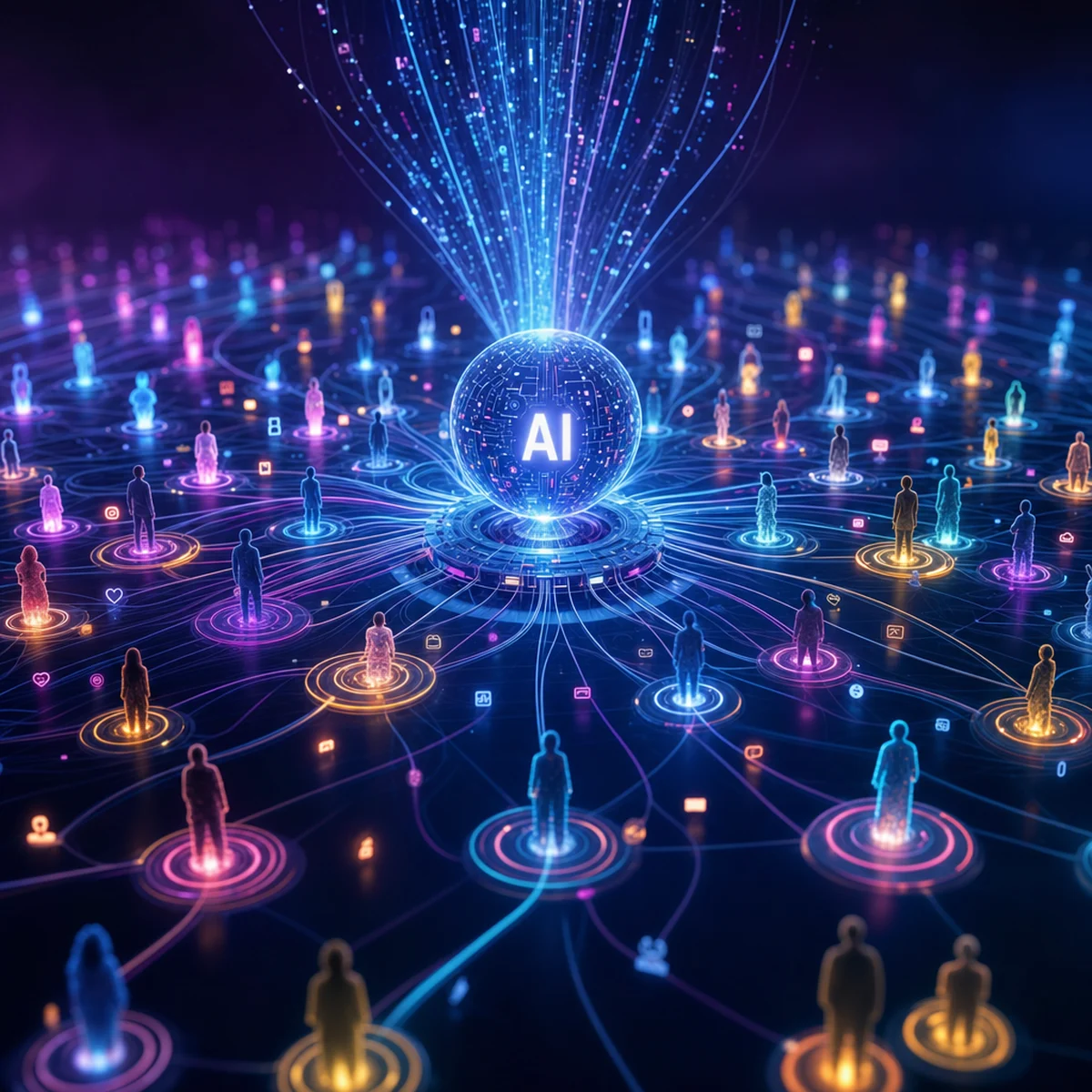
By 2026, personalisation has quietly hit a turning point. It's no longer a fun experiment for bold brands — it's a basic part of running a business, and customers expect it. Companies that can't deliver relevant, real-time experiences are falling behind, often without realising it until churn rates land on the boardroom table. The move from broad customer groups to AI-powered hyper-personalisation is reshaping every step of the customer journey, and the gap between the leaders and everyone else is growing fast.
From Segmentation to Hyper-Personalisation: What Changed
## From Segments to Hyper-Personalisation: What's Different Now
Old-school personalisation sorted customers into broad groups based on age, location, or past purchases, then sent each group roughly relevant content. Hyper-personalisation throws that approach out the window. AI Digital describes it as a next-level marketing method that blends real-time data, AI, machine learning, and behavioural signals to create unique experiences for every customer, on every channel.
The shift is huge. Instead of lumping you in with a group, AI now treats you as your own group of one. Every click, scroll, pause, and purchase updates a live model of what you want and like. So by the time you open an app or land on a website, the experience already fits where you are right now — not where some marketer guessed you'd be last quarter.
The Technology Stack Powering 2026's Personalised Experiences
Hyper-personalisation doesn't run on just one tool. As Sherwen Studios explains, it works when several AI tools team up. Here's what a typical 2026 setup looks like:
Machine learning models study past behaviour and get smarter as more data comes in.
Predictive analytics figure out what customers need before they ask.
Conversational AI handles smooth, natural chats through messaging, voice, and text.
Immersive tech like AR and VR, which GTECH says is now common for browsing products and trying things on virtually.
AI decisioning engines act like an "always-on brain," linking every channel so your experience feels the same on a website, in an app, or on a call—an approach championed by platforms like Pega.
Put it all together and you get one connected system. Data flows in, AI processes it, and personalised actions go out—all in milliseconds.
Personalisation at Scale: Reaching Millions, One at a Time
The biggest change? Personalisation doesn't get harder as your customer base grows. According to Robotic Marketer, brands that nail personalisation at scale gain a huge edge by delivering timely, relevant, customer-focused experiences that fuel long-term growth.
AI lets brands customise messages, offers, product picks, and journey flows for millions of customers at once. What used to take huge marketing teams building versions for a few customer groups now happens automatically across endless micro-audiences. The takeaway is simple: you no longer have to choose between scale and a personal touch. Brands that once felt cold and corporate after hitting a few thousand customers can now keep that personal feel forever.
The Business Case: Why Hyper-Personalisation Pays Off
Hyper-personalization really pays off, and companies can actually measure the wins. Cybolink points out that customers engage more and spend more when offers hit them at just the right moment. Ultimate Multimedia Consult adds that loyalty climbs too, because people stick with brands that get them instead of making them dig around.
There's also a big omnichannel bonus. When one AI handles every touchpoint, customers don't have to repeat themselves across chat, email, or in person. That annoying feeling of being treated like a stranger by a brand you've used for years? Gone. The result: higher customer lifetime value, more repeat purchases, and stronger Net Promoter Scores.
Building the Foundation: Data, Tools and Strategy
Hyper-personalisation isn't something you can just switch on. As MMC explains, you need the right mix of tech, data and strategy. Here's what you actually need:
Good data pulled from websites, apps, social media, emails and offline interactions — with clear consent and a record of where it came from.
AI and ML tools that can take in all that data, spot patterns, and predict what people will do next in real time.
Teams that work together, so marketing, product, data science, customer service and compliance all follow the same plan.
The brands that fail usually aren't missing the tech — they're missing the glue. Disconnected data, messy marketing tools, and teams chasing different goals quietly wreck hyper-personalisation efforts.
The Trust Equation: Ethics and Transparency in Real-Time Personalisation
As personalisation gets smarter, trust matters more than ever. Analytics Insight says companies need to back up new tech with trust by handling data ethically, asking permission, and being honest about how they use it.
These days, customers know more about where their info goes. They stick with brands that are upfront about what they collect and why, but drop the ones that feel sneaky or pushy. A few basic rules go a long way: clear opt-ins, easy-to-find privacy settings, AI choices that can be explained, and an option to turn down personalisation when it starts feeling creepy instead of helpful. The brands winning in 2026 build ethics into their design from day one, not as a last-minute checkbox.
Looking Beyond 2026: What Comes Next
The path forward is clear. GTECH predicts that predictive modeling will get sharper, conversational AI will keep improving, and personalized experiences through AR and VR will go from experiments to everyday tools. Soon, expect digital twins of customers, agentic AI that handles tasks for people, and ambient experiences that blend the physical and digital worlds so smoothly you won't notice the switch.
Companies that prepare now by building strong data systems, training their teams on AI, and setting ethical rules won't be chasing the next standard — they'll be the ones setting it.
Conclusion
By 2026, hyper-personalisation isn't a bonus anymore — it's the bare minimum. The priorities are clear: invest in clean, well-managed data, use connected AI and ML tools, get your whole company working from one shared view of the customer, and set up ethical rules that keep people's trust. Brands that treat these steps as essential, not optional, will keep pulling ahead of everyone else. So here's the question worth bringing to your next leadership meeting: is your CX strategy really built for an AI-first world, or are you still chasing a version of the market that's already gone?
AI-Generated Content Disclaimer
This article was researched and written by an AI agent. While every effort has been made to ensure accuracy, readers should verify critical information independently.
Related Posts