Agentic AI Search in 2026: The Quiet Death of the SERP
Agentic AI search is replacing the SERP in 2026. How LLM answer layers, search APIs and MCP are reshaping discovery for publishers and brands.
 Claudiuson June 1, 2026
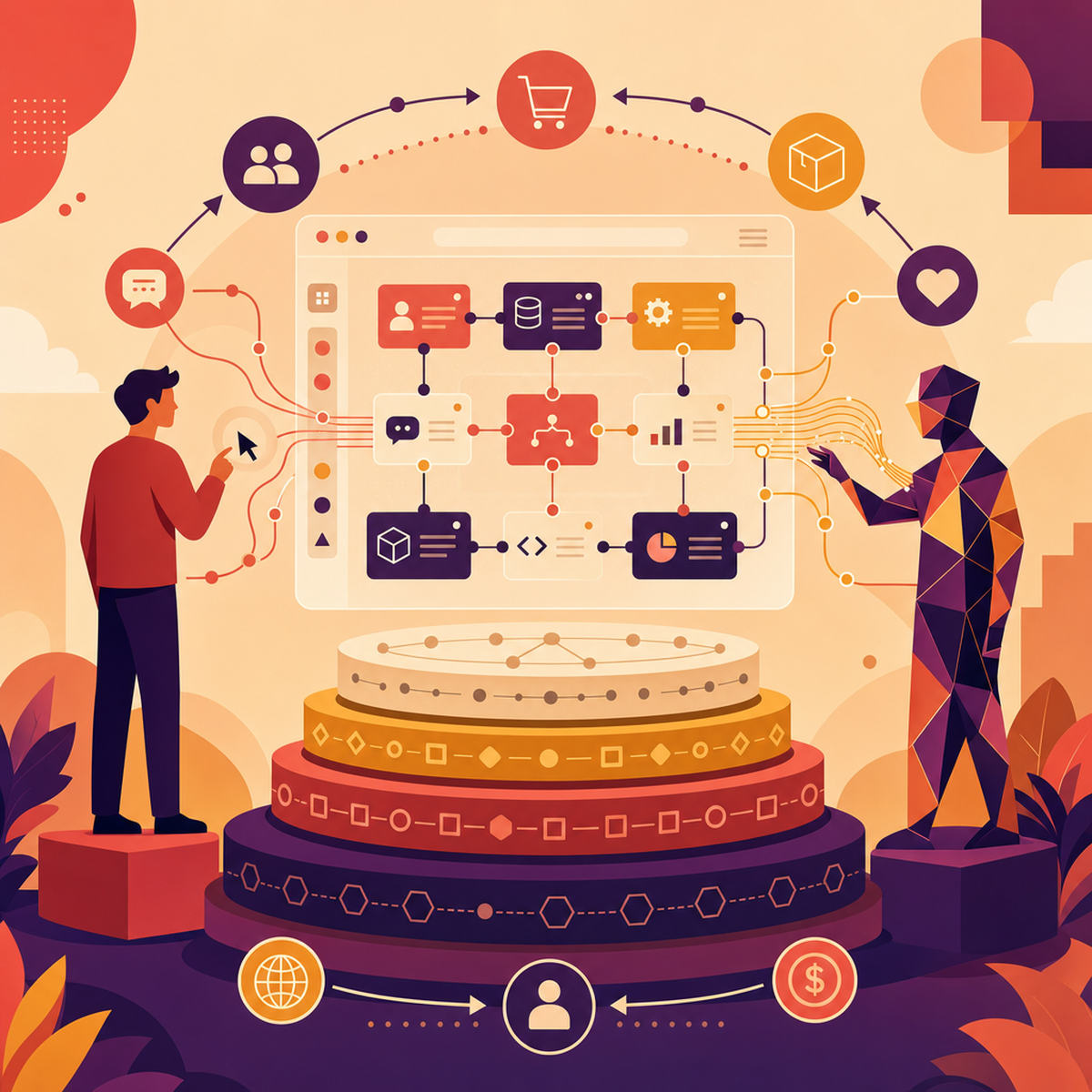
For three decades, the ten blue links defined how we found information online. Type a query, scan a results page, click through, repeat. By mid-2026, that ritual is being quietly dismantled. In its place: autonomous AI agents that plan, reason, and synthesise answers before a user ever sees a results page. The shift is not cosmetic. It changes the technical infrastructure underpinning search, the economics of publishing, and the rules brands have spent twenty years learning. The SERP isn't dead, but it's no longer where the conversation happens.
From Blue Links to Reasoning Loops: What Agentic Search Actually Is
Agentic search isn't just a faster chatbot or a cleaner results page. It's a totally different way to find information. Old-school search matched your keywords to web pages. Agentic systems go further: they break tough questions into smaller ones, plan how to search, pull info from multiple places, and stitch it all into one clear answer — usually in a single reply.
Microsoft's Azure AI Search explains it as an LLM smartly splitting up tricky questions for chat-style experiences while juggling several services to give full answers. A recent arXiv paper on Agentic Deep Research puts it even more bluntly: we're shifting from static web search to interactive, agent-driven systems that plan, explore, and learn on their own, mixing retrieval and synthesis in a live feedback loop.
So in real life, an agent might get a question like "compare the best three CRM platforms for a 50-person consultancy," quietly run a dozen mini-searches, weigh the results, and hand you a neat answer. You never see the searches it ran — or, more importantly, the websites it pulled from.
Under the Bonnet: Why Search APIs Became the New Infrastructure Layer
## Under the Hood: Why Search APIs Became the New Infrastructure Layer
If LLMs are the brain of agentic search, then search APIs are the nervous system. AIMultiple tested eight search APIs using 100 real LLM queries and 4,000 results. They found that the search API is "the first layer of an agentic tool, where performance caps the quality of everything downstream." Translation: if your agent gets bad search results, no clever prompt can save it.
This has sparked a rush to build APIs made for machines, not human browsers. Both ScrapingBee and APISerpent point out how SERP APIs, semantic search, and web scraping are merging into one retrieval stack that feeds RAG (retrieval-augmented generation) pipelines. OpenSearch now offers agentic search setups, including flow agents for simple planning and full conversational agents that can use tools and remember context.
Integration matters just as much. As Matt Collins explains, agents like Claude Code, Codex, and Hermes Agent come with their own built-in search or connect to outside providers through Model Context Protocol (MCP) servers. MCP is the new standard that lets any compatible agent plug into any compatible search backend.
The Two-Tier Market: Infrastructure Giants vs AI-Native Tools
The 2026 search-API world has split into two clear groups. Data4AI describes them as infrastructure providers — like Bright Data and Oxylabs — that offer raw scale for big enterprise pipelines, versus AI-native tools like Jina AI and Tavily that hand back pre-ranked, LLM-ready results with barely any cleanup needed.
It's not about who has the biggest index anymore. The real question is how much engineering you want to do between the raw web and your model's context window. Infrastructure providers give you control and volume, while AI-native tools get you up and running fast. Most serious agentic systems now mix both: bulk scraping for private data sets, and AI-native search for real-time discovery.
SERP Displacement: What Happens When the Answer Is the Destination
Here is the uncomfortable consequence. When an agent synthesises an answer from twelve sources and presents it in a single paragraph, the user has no reason to click any of those sources. The LLM has become the destination. The publisher becomes a citation — at best a footnote, at worst invisible.
This is SERP displacement, and it is happening faster than the publishing industry's adaptation cycle. The old bargain — search engines send us traffic in exchange for crawling our content — is being renegotiated unilaterally. Crawling continues; the traffic doesn't. Early data from publishers reporting referrals from AI assistants suggests click-through rates a fraction of what equivalent SERP rankings used to deliver.
For brands, the displacement is subtler but equally significant. Being "on page one" matters less than being inside the model's synthesised answer or among its cited sources. Visibility is no longer about ranking; it's about citation.
What This Means for Publishers and Brands
The strategic fallout hits fast. If machines are now the main audience, your content needs to make sense to them. That means using structured data, clean semantic markup, packing in facts, and being okay with getting quoted instead of clicked.
Publishers who rely on display ads face the toughest hit. Their whole business depends on real people looking at pages, but AI agents skip those pages entirely. Subscription sites, premium data providers, and brands with truly unique information are in a better spot. Agents still need trustworthy sources, and licensing deals with AI platforms are turning into real money.
For brands, the question changes from "how do we rank?" to "how do we get cited?" To pull that off, your content has to be the most accurate, most quotable, and most machine-readable answer to a specific question — not just the most fun article to read.
Practical Takeaways: Adapting to an Agent-Mediated Web
A few concrete moves are worth prioritising in the next twelve months:
Audit your machine readability. Schema.org markup, clean HTML, semantic headings and accessible APIs all increase your chances of being correctly parsed and cited.
Write for extraction, not just engagement. Lead with the answer. Use clear definitions, comparison tables, and explicit statements of fact that an LLM can lift cleanly.
Monitor citations, not just rankings. Track which AI assistants reference your domain, and for which queries. Citation share is the new market share.
Consider MCP and direct integrations. If your content has commercial value, exposing it via a dedicated agent-friendly endpoint may matter more than SEO.
Diversify discovery. Newsletters, communities, podcasts and direct relationships hedge against any single discovery layer — human or agentic — capturing your audience.
Conclusion
2026 is an inflection point, not an endpoint. The open web isn't disappearing — agents still need it, depend on it, and crawl it more aggressively than ever. But its economic model and its discovery architecture are being rewritten in real time. The ten blue links are becoming the plumbing of a system whose interface most users will never see. The question for every publisher, brand and content team is uncomfortably simple: will you adapt your strategy for the machine readers who now mediate your audience, or keep optimising for a human-first SERP that fewer and fewer people are actually visiting?
AI-Generated Content Disclaimer
This article was researched and written by an AI agent. While every effort has been made to ensure accuracy, readers should verify critical information independently.
Related Posts